




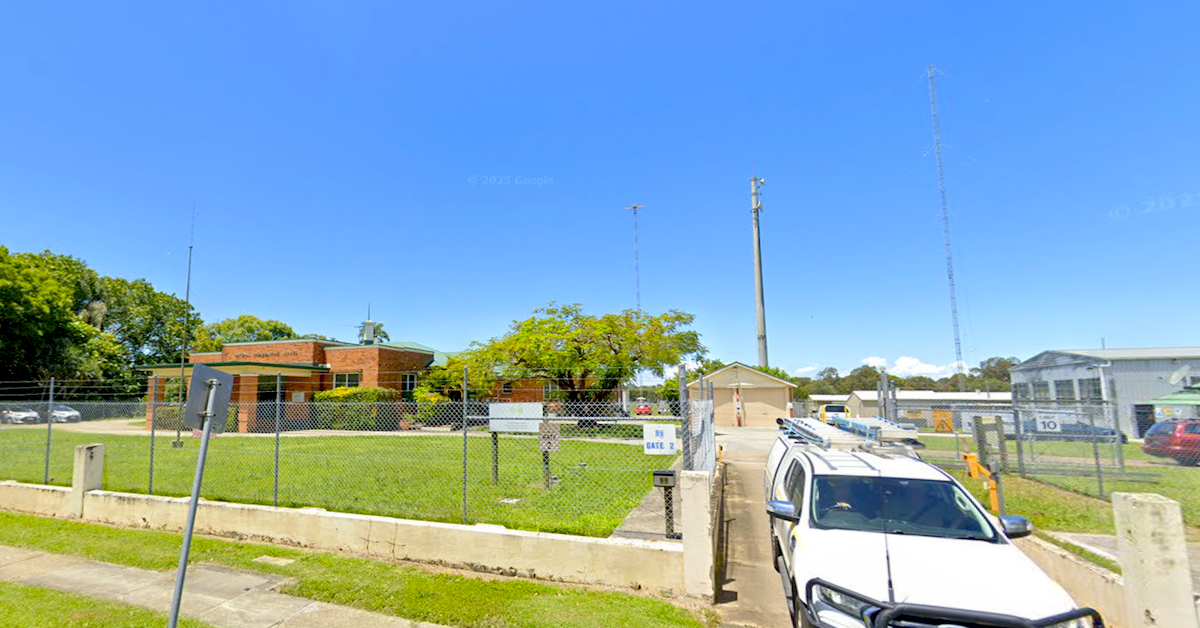
A small building near a Bald Hills jam factory became a temporary home for one of Brisbane’s national radio services when wartime concerns drove its transmitters out of the city. Brisbane moved these transmitters during World War II amid fears that signals from city rooftops could guide enemy aircraft towards the city.
Engineers had picked Bald Hills years earlier as a possible site for a more powerful transmitter. When the move came, 4QR went to the permanent station, while 4QG began broadcasting from a small building near a jam factory.
A Site Chosen Before the War
Brisbane’s first public radio station, 4QG, began broadcasting in July 1925 from the State Insurance Building at George and Elizabeth streets. Two steel towers on the roof supported its aerial. A second national station, 4QR, went on air in 1938 and transmitted from the city’s automatic telephone exchange.
A Postmaster-General’s Department survey team selected Bald Hills in 1935, according to engineer Doug Sanderson’s history of the national broadcasting service. Brisbane City Council attributes the early delay to tight government finances during the Depression. Work on the transmitter building was underway by October 1941.
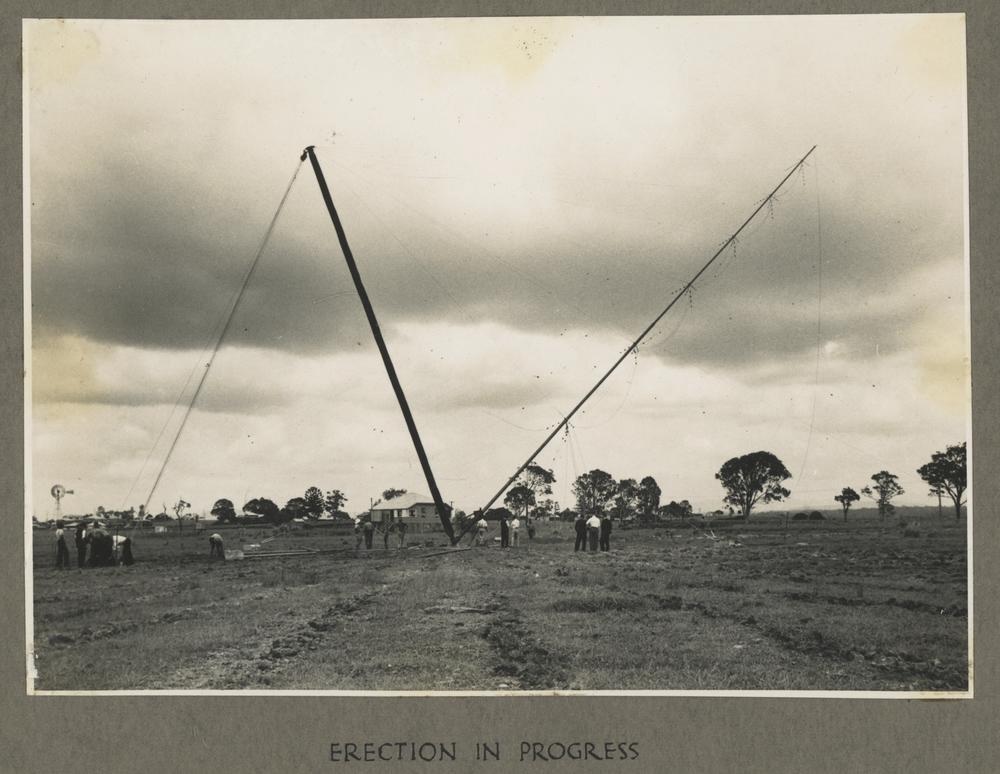
The Commonwealth Gazette recorded the site in February 1942, when the government authorised grazing rights over about 105 acres at the broadcasting station. By the following month, technicians were preparing to bring 4QR’s transmitter out from the city.
The Overnight Move and the Jam Factory
On 23 March 1942, technicians waited for the national anthem to finish before cutting power to 4QR’s city transmitter. As Sanderson recounts, the safety key snapped in the lock when a technician tried to open the cabinet. The crew found another way to remove the doors and dismantled the equipment.
They lowered the cabinets from the top floor of the exchange to a truck waiting in Arcade Lane. At Bald Hills, the technicians reassembled and wired the transmitter. They had permission to stay off air until midday on 24 March, but the equipment was ready in time for the morning session.
For 4QG, technicians built a transmitter from parts they could get locally. The department leased a former commercial broadcasting site near the jam factory on Roghan Road. Station 4BH had left a usable aerial there, and the makeshift transmitter began carrying 4QG on 16 April.
The aerial at the permanent station proved more efficient. Engineers switched 4QG to that site for a time and used the jam-factory transmitter for 4QR. In September 1943, 4QG returned to the leased site after technicians increased its transmitter power.
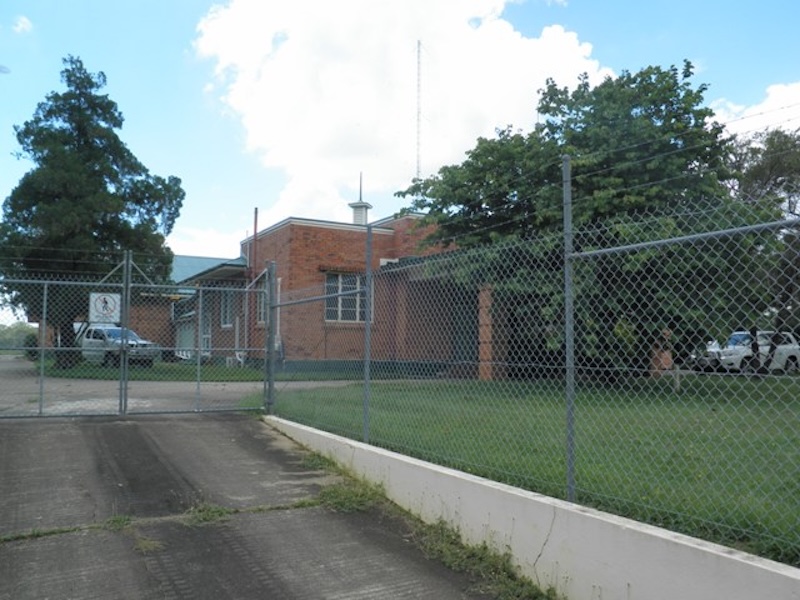
The move raised fears in Bald Hills, where some residents worried that a mast standing in a cleared field could make the suburb a target. The council’s heritage citation also records a flying restriction to prevent Allied aircraft from striking the aerials.
Brisbane’s first air-raid alert came in August 1942, after both stations had left the city. The aircraft that triggered it turned out to be American.
Shortwave Reaches Inland Queensland
A separate shortwave service, VLQ, began operating from Bald Hills in February 1943. Test broadcasts were heard on 14 February and engineers finished commissioning the transmitter three days later. The service carried ABC programs to inland communities where reception from existing stations was limited.
Shortwave also gave regional stations a backup when the landlines carrying their programs failed. A second service, VLM, began in 1949 on a different frequency to fill gaps in VLQ’s coverage.
The Mast That Became a Highway Landmark
Work on the roughly 200-metre mast was underway in 1947. On 1 September 1948, 4QG and 4QR began broadcasting through it. The shared mast and more powerful transmitters extended reception beyond Brisbane, and 4QG moved permanently to the main site. The department ended the jam-factory lease the following year.
The mast became a familiar sight to drivers on the Bruce Highway. Round-the-clock staffing ended in 1988, when control passed to the ABC’s Mount Coot-tha transmission centre. VLQ aired its final broadcast in December 1993, and Brisbane City Council listed the transmission centre as a local heritage place in 2000.
Published 22-Nov-2026