



By Cathy Brand | Fire Safety Advocate and CEO of Brooks Australia
You could spend hundreds of dollars upgrading your smoke alarms before Queensland’s 1 January 2027 deadline and still find that your home doesn’t quite meet the requirements. Perhaps the alarms are the right type but aren’t properly interconnected, or you’ve replaced an existing hardwired alarm with a battery-powered model without realising the rules treat them differently.
It’s understandable that homeowners have questions. Do you really need to replace every alarm? Can you install new ones yourself, or do you need an electrician? How do you know whether an installer is recommending what your home actually needs? And once the work is finished, what should you keep as proof that everything has been done properly?
Fortunately, getting this right doesn’t have to be complicated. Much depends on understanding what’s already installed in your home and knowing which questions to ask before making changes.
Before You Replace Anything, Look at What You Already Have
One of the first things I encourage homeowners to do is take stock of their existing smoke alarms. You may not need to replace every unit, particularly if some already meet the requirements, but you do need to understand whether they can form part of a compliant system.
Queensland requires photoelectric smoke alarms complying with AS 3786:2014, without an ionisation sensor. They must be less than ten years old, operate when tested and be interconnected so that all required alarms sound together.
An existing alarm that already meets these requirements may not need replacing. However, alarms must be replaced within ten years of manufacture, and one that fails to operate when tested must be replaced immediately.
The locations matter just as much. Alarms are required in every bedroom, in hallways connecting bedrooms to the rest of the home, and on each storey. Where there are no bedrooms on a storey, an alarm is generally required along the path of travel to an exit. There are also rules about positioning alarms near walls, light fittings, air-conditioning vents and ceiling fans.
A useful starting point is to walk through your home and note where the alarms are, how they are powered and whether they sound together when tested.
Check the manufacture date and Australian Standard marking where safely accessible, or refer to the manufacturer’s documentation. If you’re uncertain about a hardwired unit, there’s no need to remove fittings or investigate wiring yourself. An electrician can help establish what is already there.
Can You Install Smoke Alarms Yourself?
For many homeowners, this is the question that determines what happens next.
Queensland allows compliant smoke alarms with non-removable ten-year batteries to be installed without an electrician, where battery-powered installation is permitted. Wireless interconnection means the alarms can communicate without running new interconnecting cables through the home.
The important exception is an existing hardwired alarm. If it needs replacing, the replacement must also be hardwired, and the electrical work must be carried out by a licensed electrician. New homes and certain substantial renovations have additional hardwiring requirements.
At Brooks, we offer both mains-powered and sealed ten-year battery smoke alarms because different homes have different installation needs. Neither option is automatically the right choice for every property.
There is another point worth checking before buying: whether all the alarms will work together. A home can contain several individually compliant alarms and still fall short if they are not properly interconnected.
DIY or Electrician? Choosing the Right Smoke Alarm

Different homes have different installation needs. These two Brooks Australia models illustrate the distinction between battery-powered and mains-powered smoke alarm options.
Battery-powered: EIB650iRF
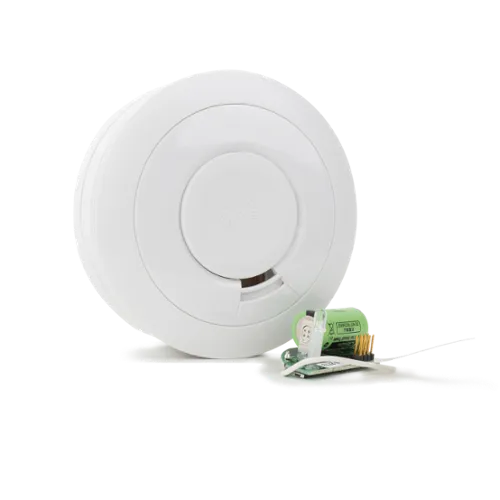
A photoelectric smoke alarm with a sealed ten-year lithium battery and factory-fitted RadioLINK wireless interconnection.
An option for DIY installation where battery-powered alarms are permitted.
Mains-powered: EIB3016
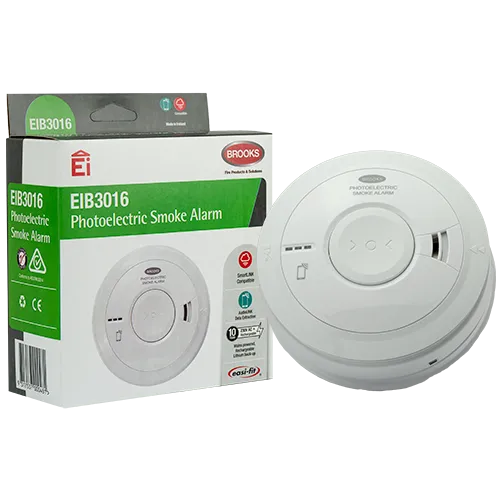
A 230V mains-powered photoelectric smoke alarm with a rechargeable ten-year lithium backup battery. Supports wired interconnection or compatible wireless interconnection with an additional module.
Electrical installation requires a licensed electrician.
Finding an Electrician You Can Feel Confident About
If your home needs electrical work, a good starting point is finding a contractor who will explain what is required before recommending a package.
Ask for the electrical contractor licence number and check that it is current. It is also reasonable to request an itemised quote showing the proposed models, number and location of alarms, interconnection arrangements and any additional accessories.
I’d also ask whether the installer has checked the existing system before recommending replacements. That can help avoid unnecessary work and ensure any new alarms are compatible with what’s already installed.
Some homes may have a combination of hardwired and battery-powered alarms, provided the arrangements meet the applicable requirements.
Compatibility is particularly important when extending or replacing a system. Brooks, for example, offers different interconnection options across its ranges, and the accessory needed for one model may not suit another.
A good installer should be able to explain those choices in everyday language. You should also feel comfortable asking whether the quote covers testing, removal of old alarms and the relevant electrical documentation.
Six Questions Worth Asking Before You Book an Electrician
- Do you hold a current Queensland electrical contractor licence?
- Have you assessed the existing alarms and layout of my home?
- Which alarm models are you recommending, and why?
- How will you make sure all the required alarms sound together?
- Does the quote include installation, accessories, testing and removal of old alarms?
- What documentation will I receive when the work is finished?
You can check an electrical contractor’s licence through Queensland’s official electrical licence search.
The Paperwork Worth Keeping
When the installation is finished, keep the invoice, alarm model details, installation date and any relevant electrical certificates together with your household records.
For electrical installation work, the contractor must provide a certificate of testing and compliance. Other electrical work may require a certificate of testing and safety. The electrician can explain which document applies to the work performed.
An electrical certificate confirms the relevant electrical work has been tested for electrical safety and applicable electrical requirements. It is not, by itself, a guarantee that every aspect of the property’s smoke alarm system complies with the legislation.
These certificates are different from the general smoke alarm inspection reports or private compliance certificates sometimes offered by service companies. Such reports may be useful, and a property manager may request one for its records, but purchasing a commercial smoke alarm compliance certificate is not automatically a legal requirement.
For a homeowner fitting permitted battery-powered alarms, a simple record of what was installed and when can still be valuable.
It’s also worth keeping the manufacturer’s instructions. They explain how to test and clean the alarms, recognise warning signals and know when replacement is due.
What If You’re Selling, Renting or Reviewing Your Insurance?
Selling your home?
- Upgraded interconnected photoelectric alarms have been required for properties being sold since January 2022.
- Check the alarms before listing your property and ensure compliance before ownership transfers.
- Ask your conveyancer about the required smoke alarm notice, Form 24 and applicable seller disclosure documents.
Renting out a property?
- Rental properties must already meet the upgraded smoke alarm requirements.
- Landlords must test and clean alarms within 30 days before a tenancy starts or renews.
- Tenants are responsible for testing and cleaning alarms at least once every 12 months during the tenancy.
Reviewing your insurance?
- Non-compliant alarms do not automatically invalidate every insurance policy.
- Ask your insurer how smoke alarm compliance relates to your particular cover.
- Keep installation records, invoices and relevant electrical certificates.
For more information, see the Queensland Fire Department’s smoke alarm guidance . For individual circumstances, consult your conveyancer, property manager or insurer as appropriate.
Knowing Your Home Is Ready
Before considering the job finished, make sure you understand how to test the alarms and what should happen when one activates. If an installer has completed the work, ask for a demonstration of the interconnected system before they leave.
The manufacturer’s instructions are the best starting point for routine testing and cleaning. It’s worth becoming familiar with them when the alarms are first installed, rather than waiting until something goes wrong.
Queensland’s January 2027 deadline is an important reason to review the smoke alarms in your home. Yet the real value of getting this right is more personal than meeting a date on the calendar.
It’s knowing that the people who live beneath those alarms have the protection of an early warning system that has been thoughtfully chosen, correctly installed and properly maintained.
General information only. Smoke alarm requirements depend on the dwelling, existing electrical installation and applicable building requirements. Electrical work must be performed by appropriately licensed personnel. Installation records do not guarantee insurance coverage or replace legal obligations.

Home Fire Safety with Cathy Brand is a five-part sponsored editorial series presented in partnership with Brooks Australia.
Published 20-November-2026