




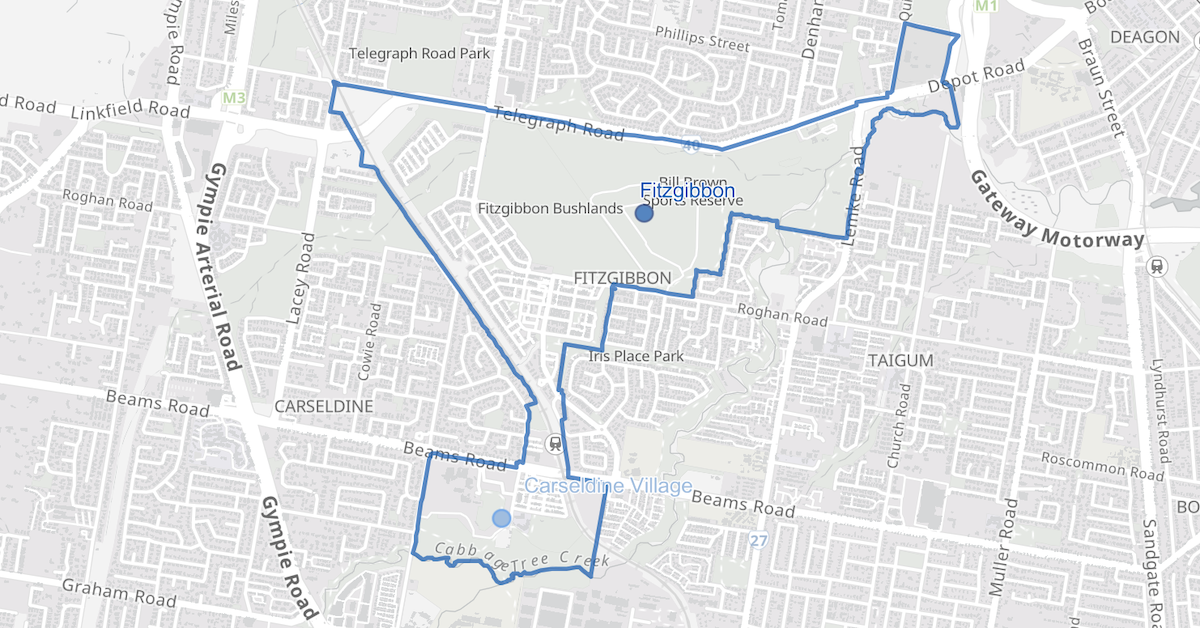
On Brisbane’s northside, where modern housing meets remnants of bushland, there is little to suggest a place anchored in colonial drama. In Fitzgibbon, the suburban streets hum with the quiet routine of modern life, showing few visual clues to the fierce debates that once shaped the state.
Embedded in the locality’s identity, however, lies the footprint of an Irish engineer who helped convince a cash-strapped colonial government to make a contentious infrastructure gamble.
An engineer with a cheaper way west
Colonial ambition demanded better access to the rich agricultural lands of the Darling Downs, while bullock teams struggled over rough roads vulnerable to bad weather. Abraham Fitzgibbon arrived in Queensland in June 1863 and was soon drawn into the colony’s search for an affordable railway. Appointed Chief Engineer in September, the former New Zealand railway consultant advocated a narrow 3 ft 6 in gauge rather than the 4 ft 8½ in standard gauge.
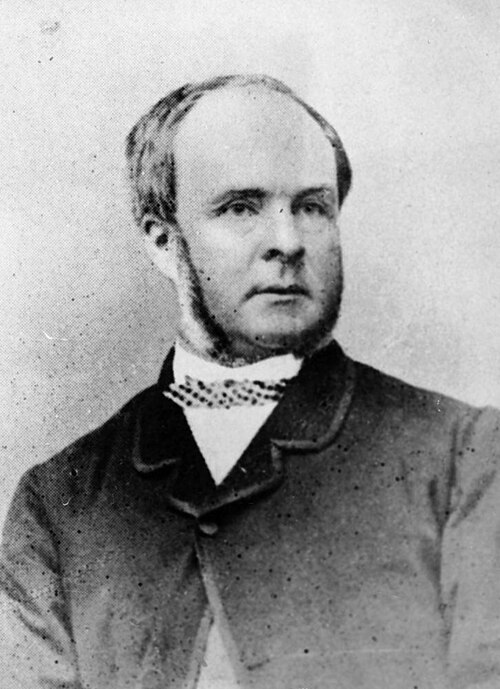
The narrower system promised cheaper construction and greater flexibility through difficult country. Opposition was fierce. Debate over the 1863 Railway Bill focused heavily on the proposed gauge, while critics in Parliament and the press questioned whether the colony was taking too great a risk on an unconventional main-line railway.
Queensland ultimately backed Mr Fitzgibbon’s approach.
Three feet six inches — and no turning back
Crews broke ground on the first section at North Ipswich in 1864 after months of political argument. Queensland’s first railway opened to Bigge’s Camp, later Grandchester, on 31 July 1865, and the network soon pushed west towards Toowoomba, Dalby and Warwick.
The opening vindicated narrow gauge as a workable railway system, but Mr Fitzgibbon’s own career remained contentious. Professional and political disputes continued around the railway program, and his contract was terminated in 1867.
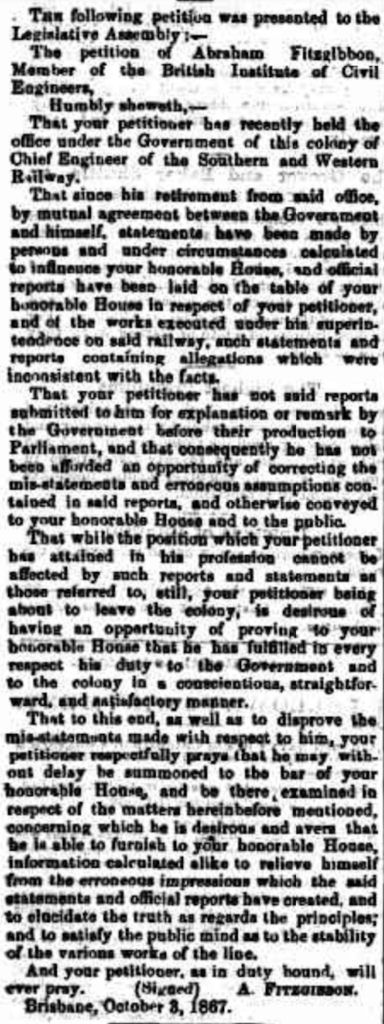
Photo Credit: National Library of Australia
Mr Fitzgibbon later returned to Britain and died at Bushey Heath, Hertfordshire, in 1887, but the gauge he championed endured. By the turn of the century, thousands of kilometres of narrow-gauge railway had been laid across Queensland, forming the backbone of a network that connected inland communities with ports and markets.
Much of Queensland’s rail system still operates on the same 1,067 mm gauge.
His name found a home a century later
A century after the first railway opened, Mr Fitzgibbon’s name resurfaced on Brisbane’s expanding northside. The suburb was formally named after him in 1971, giving a comparatively modern community an unexpected link to Queensland’s pioneering railway history.
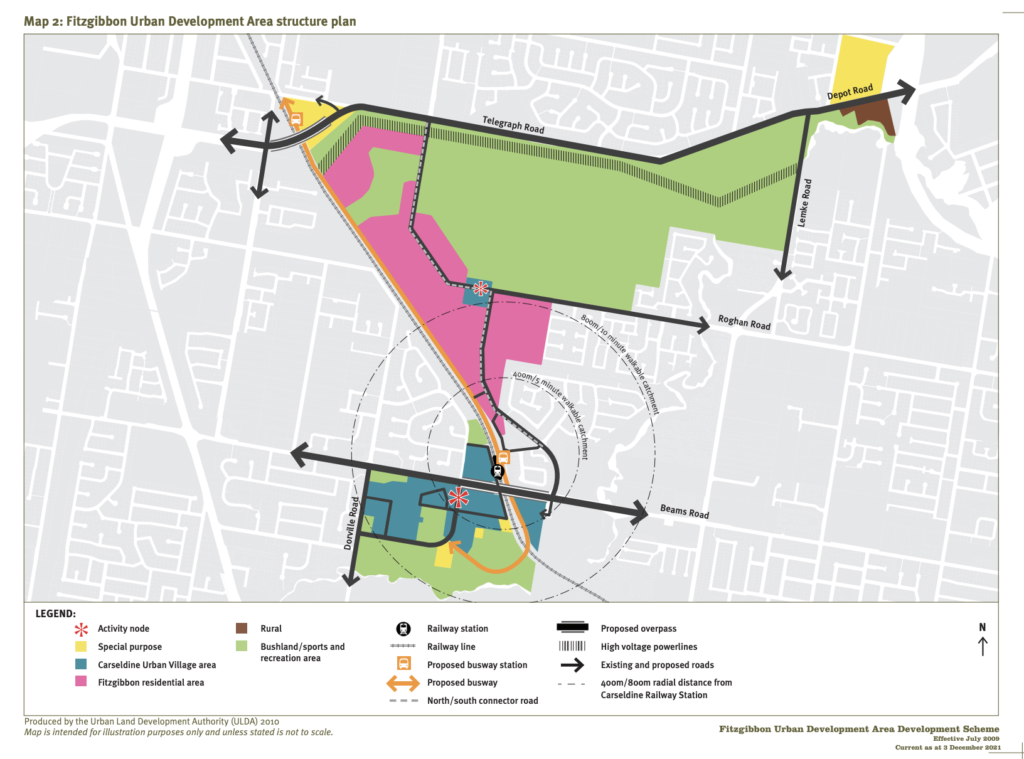
The declaration of the Fitzgibbon Priority Development Area in 2008 set the scene for substantial residential development across the district while planning documents also recognised significant bushland, open space and ecological corridors.
Nearby Boondall Wetlands adds to the environmental importance of the broader area. Mangroves, tidal flats, wetlands and forest provide habitat for native wildlife and migratory shorebirds only a short distance from established suburbs.
Mr Fitzgibbon helped force colonial lawmakers to decide how far they were prepared to depart from railway convention to build a network Queensland could afford. Today, the suburb bearing his name sits inside another debate over how a growing city accommodates housing while retaining valuable natural habitat.
Updated 26-September-2026