Queensland Punishes Blues To Send Origin Series Back To Brisbane

Twenty minutes into State of Origin II, New South Wales looked to be cruising towards the shield.

The Blues had raced to a 12-2 lead, Mark Nawaqanitawase had already crossed on debut and Queensland had been forced to send both Cameron Munster and Tino Fa’asuamaleaui for head injury assessments during a chaotic opening half-hour.

Much of the pre-match discussion centred on whether Queensland could turn its strong periods in Game One into an 80-minute performance.


Click to read the MATCH PREVIEW


The answer arrived emphatically at the MCG, in one of the Maroons’ most impressive performances in recent years.

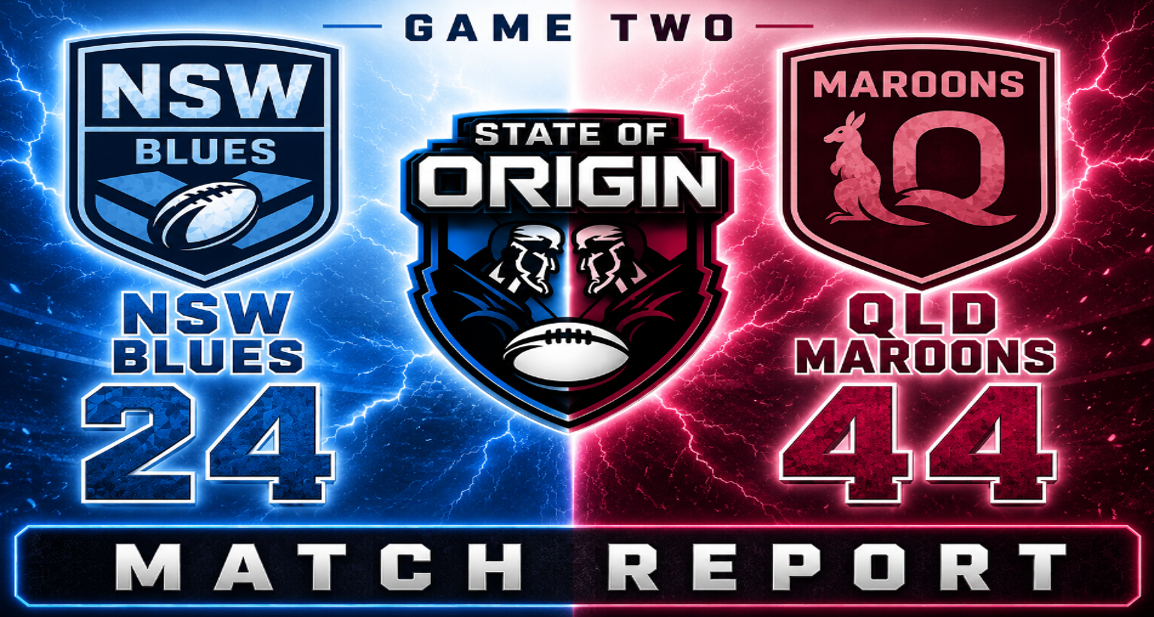
Queensland recovered from the early setback, wrestled momentum back through the middle of the field and then dominated the second half to defeat New South Wales 44-24 at the MCG on Wednesday night, levelling the series at 1-1 and setting up a winner-takes-all decider at Suncorp Stadium.

Played before a record State of Origin crowd of 91,671, the contest swung dramatically after the Blues’ bright start as Queensland gradually gained control through its forward pack before its outside backs took over the game.

NSW Lands The First Punch

NSW capitalised immediately after Sam Walker opened the scoring with a penalty goal when Thomas Flegler spilled the ensuing kick-off. Nawaqanitawase reacted quickest to the loose ball and put Kotoni Staggs over for the opening try before the debutant winger scored one himself soon after as the Blues surged to a 12-2 advantage.

At that stage Queensland looked vulnerable.

The Maroons were struggling to generate field position and matters became more difficult when both Munster and Fa’asuamaleaui were temporarily forced from the field for HIAs.

Hamiso Ignites The Fightback

Rather than allowing the game to slip away, Queensland found a way back through the speed and creativity of Hamiso Tabuai-Fidow.

The Dolphins star split the Blues defence with a damaging run that shifted momentum and led to Queensland’s first try. Harry Grant, Munster, Sam Walker and Max Plath all handled before Trent Loiero crashed over, reducing the margin to four points and ensuring the Maroons entered halftime with genuine belief despite trailing 12-8.

Just as importantly, Fa’asuamaleaui returned and helped Queensland regain control of the middle. The Maroons had spent much of the opening half reacting to NSW. By halftime they were the team asking the questions.

Walker, Munster And Cobbo Turn The Tide

The opening exchanges of the second half quickly confirmed that the game had changed.

Queensland’s forwards began winning the yardage battle, Grant started to find space around the ruck and the Blues struggled to contain the Maroons’ kicking game. The first blow came when Robert Toia outleapt James Tedesco to collect a Walker bomb before Max Plath and Munster combined to create space for Selwyn Cobbo, who finished in the corner to give Queensland its first lead of the night.

From there, Queensland’s confidence grew with every set.

Cobbo crossed for his second seven minutes later and the Blues suddenly found themselves chasing a game they had controlled for much of the first half. Munster and Walker continued to probe, while Harry Grant’s running game kept creating problems around the middle of the field.

Queensland Find The Weak Spot

Queensland’s coaching staff clearly saw an opportunity on the edges and they kept going back to it.

The Maroons repeatedly challenged NSW through the air and won more often than they lost. Jojo Fifita came down with one attacking kick to score, while Queensland continued to create opportunities whenever the ball was shifted wide.

Nawaqanitawase briefly gave the Blues hope with his second try on debut, but Queensland’s response was immediate. Hamiso Tabuai-Fidow crossed after another dangerous attacking raid before Staggs was sent to the sin bin for a high shot on Kalyn Ponga as NSW’s night unravelled.

By that stage the Maroons had complete control of the contest.

Harry Grant sliced through the middle to help create a try for Lindsay Collins, while Cobbo completed a deserved hat-trick as Queensland turned a close contest into a convincing victory.

Suncorp Gets Its Decider

While Cobbo’s three tries and Tabuai-Fidow’s influence will attract plenty of attention, Queensland’s win was built on far more than individual brilliance.

Fa’asuamaleaui’s return from his HIA proved crucial. Grant controlled the ruck, Collins made a major second-half impact, while Loiero and Plath both made important contributions.

A fortnight ago the Maroons were left wondering what might have been after surrendering a winning position in Sydney.

Now the series is heading back to Brisbane.

The Blues arrived in Melbourne believing they were one win away from reclaiming the shield. Instead, Queensland heads home with momentum, confidence and the chance to decide the series in front of a packed Suncorp Stadium.

Published 17-June-2022


MATCH PREVIEW

Maroons Out to Keep Series Alive as Origin Heads to the MCG

State of Origin Game 2 Match Preview

Queensland arrives in Melbourne with a point to prove.

The Maroons were the better side for long stretches of State of Origin I in Sydney, racing to a 20-6 halftime lead and threatening to blow the Blues off the park before the contest turned dramatically following Kalyn Ponga’s second-half send-off. New South Wales ultimately capitalised on the numerical advantage to claim a comeback victory and move within one win of reclaiming the Origin shield.

Now, with a massive crowd expected at the Melbourne Cricket Ground on Wednesday night, Billy Slater’s side has the opportunity to reset the narrative and force the series into a decider at Suncorp Stadium.

Why Queensland Should Be Confident

For Queensland supporters, there is plenty of reason for confidence.

While the Blues enter as favourites in many predictions, the Maroons can point to the opening 50 minutes of Game I as evidence that their game plan works. Cameron Munster controlled proceedings, Harry Grant constantly threatened around the ruck, and Queensland’s speed on the edges repeatedly exposed New South Wales’ defence.

The challenge this time is maintaining that standard for the full 80 minutes.

Walsh Returns As Maroons Reshuffle

Queensland’s line-up features several notable changes. Reece Walsh returns to the squad after missing the series opener and has been named on the bench as a potential game-breaker. Whether he enters as an impact player late in the contest or is required earlier, his speed and unpredictability could prove crucial on the expansive MCG surface.

The Maroons have also welcomed back Thomas Flegler, while Dolphins utility Max Plath retains his place in the 17 after impressing with his versatility and work ethic.

One of Queensland’s biggest losses is Patrick Carrigan, whose absence removes a proven Origin performer from the middle rotation. However, Slater has reshaped the pack around Tino Fa’asuamaleaui, Reuben Cotter, Lindsay Collins and Kurt Capewell, a group that will be tasked with matching a powerful New South Wales forward unit.

Haas And Moses Boost Blues

The Blues receive a major boost through the return of Payne Haas. The Brisbane Broncos prop is widely regarded as one of the game’s premier front-rowers and his inclusion adds significant punch to New South Wales’ engine room.

New South Wales has also recalled Mitchell Moses at five-eighth after he was cleared to return from the hamstring injury that ruled him out of the series opener. Moses brings an elite kicking game and running threat, but Origin football is a demanding environment for any player returning from a lay-off.

Queensland will undoubtedly test him defensively whenever opportunities arise.

The Blues have also been forced into a late backline reshuffle, with Mark Nawaqanitawase coming onto the wing after Casey McLean was ruled out. Tolutau Koula shifts into the centres alongside Kotoni Staggs as Laurie Daley looks to secure the series in Melbourne.

The Key Battle

The battle between the halves could ultimately decide the contest.

Nathan Cleary and Moses offer New South Wales one of the most accomplished playmaking combinations in the game, but Munster has built his reputation on delivering in Origin’s biggest moments. Alongside Sam Walker, he will be expected to guide Queensland around the park and create opportunities for strike weapons such as Ponga, Hamiso Tabuai-Fidow and Selwyn Cobbo.

Queensland’s Familiar Underdog Mindset

The Maroons also have a psychological edge that statistics cannot measure.

Queensland has built its Origin legacy on responding when backed into a corner, and there is no shortage of motivation after the manner of the Game I defeat. Many Queensland supporters will feel the opening match turned on a handful of key moments after the Maroons had built a commanding first-half lead.

That belief could become a powerful weapon in Melbourne.

Most experts have tipped New South Wales to wrap up the series, but the predictions are far from unanimous. Several former players and commentators expect Queensland’s desperation, combined with the return of key personnel, to be enough to level the series.

If the Maroons can reproduce the intensity, discipline and attacking fluency they showed before Ponga’s dismissal in Sydney, a trip to Brisbane for a winner-takes-all decider may well await.

And if that happens, the pressure will shift squarely back onto the Blues.

Match Details

State of Origin II
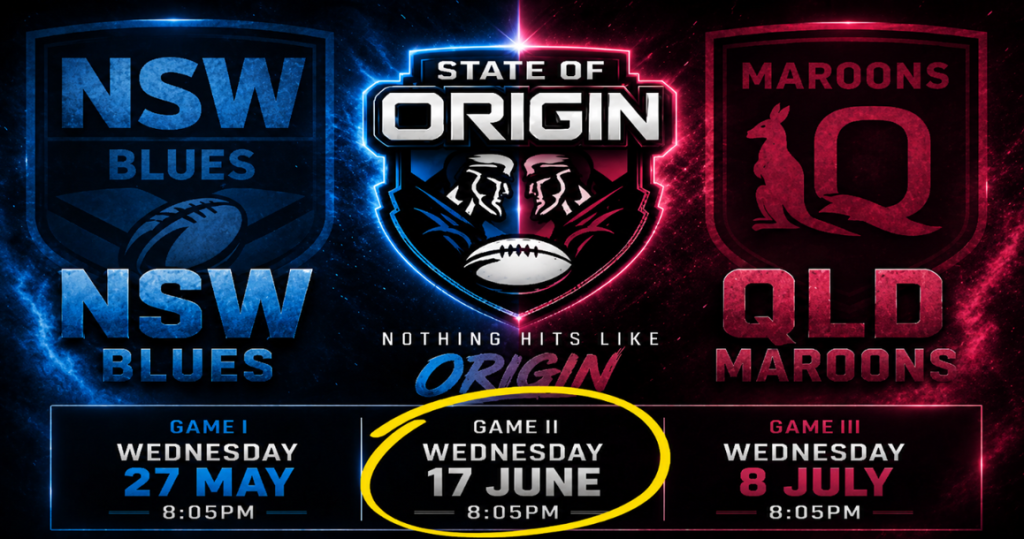
Wednesday, June 17
Melbourne Cricket Ground
Kick-off: 8:05pm AEST

New South Wales Blues

Backs: James Tedesco, Brian To’o, Tolutau Koula, Kotoni Staggs, Mark Nawaqanitawase

Halves: Mitchell Moses, Nathan Cleary

Forwards: Payne Haas, Reece Robson, Mitchell Barnett, Hudson Young, Dylan Lucas, Isaah Yeo

Interchange: Cameron Murray, Victor Radley, Addin Fonua-Blake, Apisai Koroisau

Extended Squad: Ethan Strange, Jack Bostock, Haumole Olakau’atu

Coach: Laurie Daley

Queensland Maroons

Backs: Kalyn Ponga, Selwyn Cobbo, Robert Toia, Hamiso Tabuai-Fidow, Jojo Fifita

Halves: Cameron Munster, Sam Walker

Forwards: Thomas Flegler, Harry Grant, Tino Fa’asuamaleaui, Briton Nikora, Kurt Capewell, Reuben Cotter

Interchange: Max Plath, Lindsay Collins, Kulikefu Finefeuiaki, Trent Loiero

Extended Squad: Reece Walsh, Murray Taulagi, Heilum Luki

Coach: Billy Slater

Match Officials

Referee: Ashley Klein

Touch Judges: Phil Henderson, Matt Noyen

Bunker: Chris Butler

Prediction

Queensland by 4. The Maroons showed in the opening game that they can trouble the Blues when their forwards win the middle and Munster is given time and space. If they maintain their discipline and keep all 13 men on the field, a Suncorp Stadium decider looks well within reach.

Published 17-June-2026

Popovic’s Gamble Pays Off As Socceroos Deliver Famous World Cup Statement

The Socceroos arrived in Vancouver carrying one of the youngest starting line-ups in their World Cup history and a coach prepared to make the biggest calls of his tenure.

By the final whistle at BC Place, Tony Popovic looked like a man who had got every one of them right.

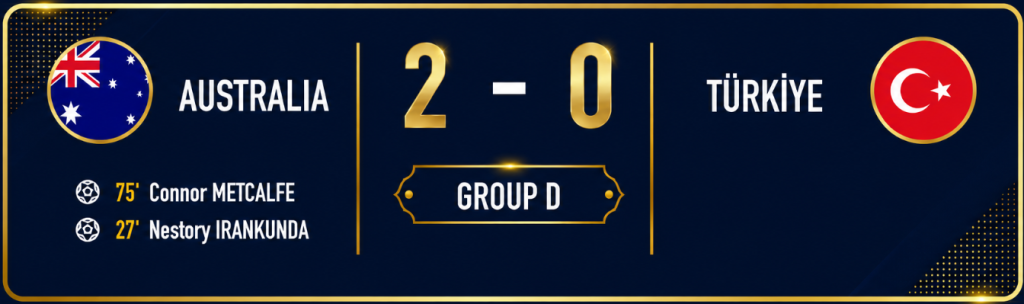
Australia opened its FIFA World Cup 2026 campaign with a stunning 2-0 victory over Türkiye at BC Place in Vancouver on Sunday, June 14 (AEST), with Nestory Irankunda and Connor Metcalfe scoring either side of halftime while Patrick Beach justified his surprise selection with a string of outstanding saves.

Against a Turkish side packed with European stars and able to control possession for long periods, the Socceroos absorbed pressure, struck with ruthless efficiency and delivered one of their most complete World Cup performances in years.

The result gave Australia its first win in a World Cup opener since 2006 and immediately strengthened its chances of progressing from Group D.

Youthful Socceroos Rise To The Occasion

The pre-match discussion centred on Popovic’s team sheet.

Beach kept his place ahead of captain Maty Ryan. Paul Okon-Engstler started in midfield. Ten members of the starting side were making their World Cup debuts.

Any concerns about nerves disappeared quickly.

The opening stages were played at a frantic pace, with both teams looking to attack directly whenever possession changed hands. Türkiye enjoyed more of the ball, but Australia looked dangerous whenever space opened up behind the defence.

The breakthrough came after 27 minutes.

Okon-Engstler launched a long pass forward from inside Australia’s half and Irankunda did the rest. The Watford winger accelerated past his marker, steadied himself and guided a composed finish beyond Ugurcan Çakir.

The goal was Irankunda’s first at a World Cup and another reminder of why he is regarded as one of Australia’s brightest attacking talents.

Beach Answers Popovic’s Biggest Call

If Irankunda provided the headline moment, Beach delivered the reassurance.

The 22-year-old goalkeeper was one of the most talked-about selections before kickoff and spent the evening showing exactly why Popovic trusted him.

Only minutes after Australia took the lead, Abdülkerim Bardakci struck a powerful effort from outside the area that appeared destined for the top corner. Beach flew across goal and got enough on the ball to push it onto the post.

Türkiye continued to control possession and territory for much of the contest.

Arda Güler tested Beach from a second-half free kick. Zeki Çelik found space in behind during the final 20 minutes. Kerem Aktürkoğlu also forced a save from close range.

Each time, Beach responded.

Australia’s defensive unit deserved plenty of credit as well. Harry Souttar, Alessandro Circati and Cameron Burgess spent long periods under pressure but rarely allowed Türkiye clear opportunities inside the box.

Metcalfe Seals It

The longer the match remained at 1-0, the more dangerous Australia’s counter-attacking opportunities became.

Jordan Bos continued to find space down the left. Mohamed Toure worked tirelessly up front. Irankunda remained a threat until he departed to a standing ovation shortly after the hour mark.

Then came the decisive moment.

With 15 minutes remaining, Metcalfe collected possession outside the penalty area and shifted the ball onto his left foot. The finish was outstanding, curling beyond Çakir and into the corner to double Australia’s advantage.

For a Turkish side that had enjoyed more than 70 per cent possession, it was a brutal setback.

Australia had spent much of the evening absorbing pressure. When chances arrived, it made them count.

An Ideal Start

The victory immediately placed Australia alongside the United States at the top of Group D after the Americans defeated Paraguay earlier in the round.

More importantly, it rewarded Popovic’s willingness to trust youth on the biggest stage.

Okon-Engstler provided the assist for the opening goal. Irankunda scored it. Beach produced one of the performances of the match. Bos, Circati and Italiano all handled themselves well under pressure.

There will be tougher tests ahead.

But for a team that entered the tournament facing questions about experience, selection and depth, the opening night could hardly have gone much better.

Australia left Vancouver with three points, a clean sheet and momentum heading into its showdown with the United States.

FIFA World Cup 2026: Full Match Schedule, Results and Kick-Off Times


CLICK HERE FOR THE CHAMPIONSHIP SCHEDULE


MATCH RESULTS

Click the graphics to view game statistics from the FIFA Match Centre

Monday, July 20

5:00am AEST — Spain vs Argentina


Sunday, July 19

7:00am AEST — France vs England


Thursday, July 16

5:00am AEST — England vs Argentina


Wednesday, July 15

5:00am AEST — France vs Spain


Sunday, July 12

11:00am AEST — Argentina vs Switzerland


7:00am AEST — Norway vs England


Saturday, July 11

5:00am AEST — Spain vs Belgium


Friday, July 10

6:00am AEST — France vs Morocco


Wednesday, July 8

6:00am AEST — Switzerland vs Colombia


2:00am AEST — Argentina vs Egypt


Tuesday, July 7

10:00am AEST — USA vs Belgium


5:00am AEST — Portugal vs Spain


Monday, July 6

10:00am AEST — Mexico vs England


6:00am AEST — Brazil vs Norway


Sunday, July 5

10:00am AEST — Paraguay vs France


6:00am AEST — Canada vs Morocco


Saturday, July 4

11:30am AEST — Colombia vs Ghana


8:00am AEST — Argentina vs Cabo Verde


4:00am AEST — Australia vs Egypt


Friday, July 3

1:00pm AEST — Switzerland vs Algeria


9:00am AEST — Portugal vs Croatia


5:00am AEST — Spain vs Austria


Thursday, July 2

10:00am AEST — USA vs Bosnia and Herzegovina


6:00am AEST — Belgium vs Senegal


2:00am AEST — England vs Congo DR


Wednesday, July 1

11:00am AEST — Mexico vs Ecuador


7:00am AEST — France vs Sweden


3:00am AEST — Cote D’Ivoire vs Norway


Tuesday, June 30

11:00am AEST — Netherlands vs Morocco


6:30am AEST — Germany vs Paraguay


3:00am AEST — Brazil vs Japan


Monday, June 29

5:00am AEST — South Africa vs Canada


Sunday, June 28

12:00pm AEST — Jordan vs Argentina


12:00pm AEST — Algeria vs Austria


9:30am AEST — Congo DR vs Uzbekistan


9:30am AEST — Colombia vs Portugal


7:00am AEST — Croatia vs Ghana


7:00am AEST — Panama vs England


Saturday, June 27

1:00pm AEST — New Zealand vs Belgium


1:00pm AEST — Egypt vs Iran


10:00am AEST — Uruguay vs Spain


10:00am AEST — Cabo Verde vs Saudi Arabia


5:00am AEST — Norway vs France


5:00am AEST — Senegal vs Iraq


Friday, June 26

12:00pm AEST — PARAGUAY vs AUSTRALIA


12:00pm AEST — Türkiye vs USA


9:00am AEST — Tunisia vs Netherlands


9:00am AEST — Japan vs Sweden


6:00am AEST — Ecuador vs Germany


6:00am AEST — Curaçao vs Côte d’Ivoire


Thursday, June 25

11:00am AEST — South Africa vs Korea Republic


11:00am AEST — Czechia vs Mexico


8:00am AEST — Morocco vs Haiti


8:00am AEST — Scotland vs Brazil


5:00am AEST — Bosnia and Herzegovina vs Qatar


5:00am AEST — Switzerland vs Canada


Wednesday, June 24

12:00pm AEST — Colombia vs Congo DR


9:00am AEST — Panama vs Croatia


6:00am AEST — England vs Ghana


3:00am AEST — Portugal vs Uzbekistan


Tuesday, June 23

1:00pm AEST — Jordan vs Algeria


10:00am AEST — Norway vs Senegal


7:00am AEST — France vs Iraq


3:00am AEST — Argentina vs Austria


Monday, June 22

11:00am AEST — New Zealand vs Egypt


8:00am AEST — Uruguay vs Cabo Verde


5:00am AEST — Belgium vs Iran


2:00am AEST — Spain vs Saudi Arabia


Sunday, June 21

2:00pm AEST — Tunisia vs Japan


10:00am AEST — Ecuador vs Curaçao


6:00am AEST — Germany vs Côte d’Ivoire


3:00am AEST — Netherlands vs Sweden


Saturday, June 20

1:00pm AEST — Türkiye vs Paraguay


10:30am AEST — Brazil vs Haiti


8:00am AEST — Scotland vs Morocco


5:00am AEST — USA vs AUSTRALIA


Friday, June 19

11:00am AEST — Mexico vs Korea Republic


8:00am AEST — Canada vs Qatar


5:00am AEST — Switzerland vs Bosnia and Herzegovina


2:00am AEST — Czechia vs South Africa


Thursday, June 18

12:00pm AEST — Uzbekistan vs Colombia


9:00am AEST — Ghana vs Panama


6:00am AEST — England vs Croatia


3:00am AEST — Portugal vs Congo DR


Wednesday, June 17

2:00pm AEST — Austria vs Jordan


11:00am AEST — Argentina vs Algeria


8:00am AEST — Iraq vs Norway


5:00am AEST — France vs Senegal


Tuesday, June 16

11:00am AEST — Iran vs New Zealand


8:00am AEST — Saudi Arabia vs Uruguay


5:00am AEST — Belgium vs Egypt


2:00am AEST — Spain vs Cabo Verde


Monday, June 15

12:00pm AEST — Sweden vs Tunisia


9:00am AEST — Côte d’Ivoire vs Ecuador


6:00am AEST — Netherlands vs Japan


3:00am AEST — Germany vs Curaçao


Sunday, June 14

2:00pm AEST — Australia vs Türkiye


11:00am AEST — Haiti vs Scotland


8:00am AEST — Brazil vs Morocco


5:00am AEST — Qatar vs Switzerland


Saturday, June 13

11:00am AEST — USA vs Paraguay


5:00am AEST — Canada vs Bosnia and Herzegovina


Friday, June 12

12:00pm AEST — Korea Republic vs Czechia


5:00am AEST — Mexico vs South Africa


MATCH SCHEDULES

All kick-off times are listed in Australian Eastern Standard Time (AEST) and derived from FIFA’s official match schedule as of 12-June-2026.


Key Socceroos Fixtures (AEST)

Sunday, June 14

2:00pm AEST — Australia (2) vs Türkiye (0)
Vancouver Stadium

Saturday, June 20

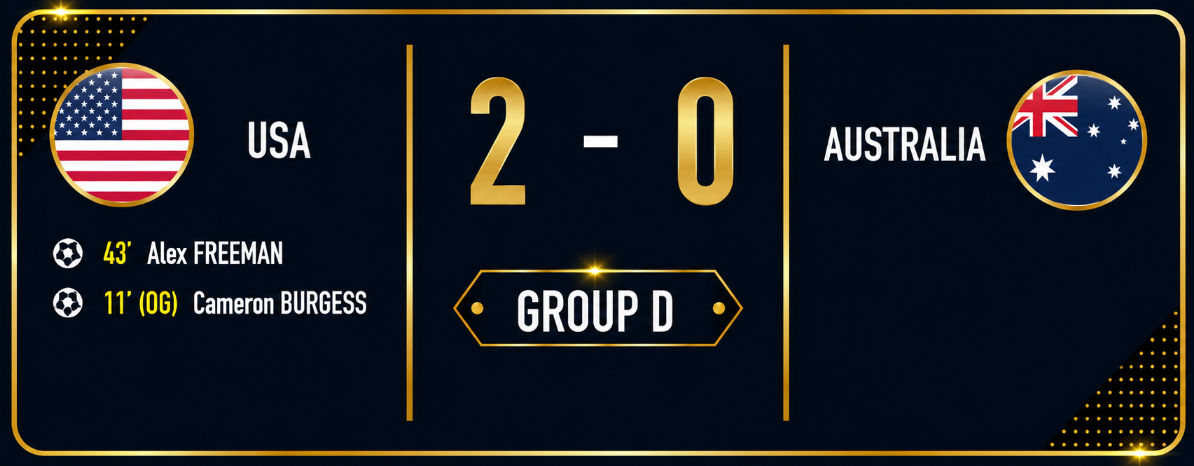
5:00am AEST — USA (2) vs Australia (0)
Seattle Stadium

Friday, June 26

12:00pm AEST — Paraguay (0) vs Australia (0)
San Francisco Bay Area Stadium


WEEK 1: GROUP STAGE — MATCHDAYS 1 & 2

June 12–18

Friday, June 12

5:00am AEST Mexico (2) vs South Africa (0)
12:00pm AEST | Korea Republic (2) vs Czechia (1)

Saturday, June 13

5:00am AEST — Canada (1) vs Bosnia and Herzegovina (1)
11:00am AEST — USA (4) vs Paraguay (1)

Sunday, June 14

5:00am AEST — Qatar (1) vs Switzerland (1)
8:00am AEST — Brazil (1) vs Morocco (1)
11:00am AEST — Haiti (0) vs Scotland (1)

🇦🇺 SOCCEROOS
2:00pm AEST — AUSTRALIA (2) vs TÜRKİYE (0)

Monday, June 15

3:00am AEST — Germany (7) vs Curaçao (1)
6:00am AEST — Netherlands (2) vs Japan (2)
9:00am AEST — Côte d’Ivoire (1) vs Ecuador (0)
12:00pm AEST — Sweden (5) vs Tunisia (1)

Tuesday, June 16

2:00am AEST — Spain (0) vs Cabo Verde (0)
5:00am AEST — Belgium (1) vs Egypt (1)
8:00am AEST — Saudi Arabia (1) vs Uruguay (1)
11:00am AEST — Iran (2) vs New Zealand (2)

Wednesday, June 17

5:00am AEST — France (3) vs Senegal (1)
8:00am AEST — Iraq (1) vs Norway (4)
11:00am AEST — Argentina (3) vs Algeria (0)
2:00pm AEST — Austria (3) vs Jordan (1)

Thursday, June 18

3:00am AEST — Portugal (1) vs Congo DR (1)
6:00am AEST — England (4) vs Croatia (2)
9:00am AEST — Ghana (1) vs Panama (1)
12:00pm AEST — Uzbekistan (1) vs Colombia (3)


WEEK 2: GROUP STAGE — MATCHDAYS 2 & 3

June 19–25

Friday, June 19

2:00am AEST — Czechia (1) vs South Africa (1)
5:00am AEST — Switzerland (4) vs Bosnia and Herzegovina (1)
8:00am AEST — Canada (6) vs Qatar (0)
11:00am AEST — Mexico (1) vs Korea Republic (0)

Saturday, June 20

🇦🇺 SOCCEROOS
5:00am AEST — USA (2) vs AUSTRALIA (0)

8:00am AEST — Scotland (0) vs Morocco (1)
10:30am AEST — Brazil (3) vs Haiti (0)
1:00pm AEST — Türkiye (0) vs Paraguay (1)

Sunday, June 21

3:00am AEST — Netherlands (5) vs Sweden (1)
6:00am AEST — Germany (2) vs Côte d’Ivoire (1)
10:00am AEST — Ecuador (0) vs Curaçao (0)
2:00pm AEST — Tunisia (0) vs Japan (4)

Monday, June 22

2:00am AEST — Spain (4) vs Saudi Arabia (0)
5:00am AEST — Belgium (0) vs Iran (0)
8:00am AEST — Uruguay (2) vs Cabo Verde (2)
11:00am AEST — New Zealand (1) vs Egypt (3)

Tuesday, June 23

3:00am AEST — Argentina (2) vs Austria (0)
7:00am AEST — France (3) vs Iraq (0)
10:00am AEST — Norway (3) vs Senegal (2)
1:00pm AEST — Jordan (1) vs Algeria (2)

Wednesday, June 24

3:00am AEST — Portugal (5) vs Uzbekistan (0)
6:00am AEST — England (0) vs Ghana (0)
9:00am AEST — Panama (0) vs Croatia (1)
12:00pm AEST — Colombia (1) vs Congo DR (0)

Thursday, June 25

5:00am AEST — Switzerland (2) vs Canada (1)
5:00am AEST — Bosnia and Herzegovina (3) vs Qatar (1)
8:00am AEST — Scotland (0) vs Brazil (3)
8:00am AEST — Morocco (4) vs Haiti (2)
11:00am AEST — Czechia (0) vs Mexico (3)
11:00am AEST — South Africa (1) vs Korea Republic (0)


WEEK 3: GROUP STAGE DECIDERS

June 26–28

Friday, June 26

🇦🇺 SOCCEROOS
12:00pm AEST — PARAGUAY (0) vs AUSTRALIA (0)

6:00am AEST — Curaçao (0) vs Côte d’Ivoire (2)
6:00am AEST — Ecuador (2) vs Germany (1)
9:00am AEST — Japan (1) vs Sweden (1)
9:00am AEST — Tunisia (1) vs Netherlands (3)
12:00pm AEST — Türkiye (3) vs USA (2)

Saturday, June 27

5:00am AEST — Norway (1) vs France (4)
5:00am AEST — Senegal (5) vs Iraq (0)
10:00am AEST — Cabo Verde (0) vs Saudi Arabia (0)
10:00am AEST — Uruguay (0) vs Spain (1)
1:00pm AEST — Egypt (1) vs Iran (1)
1:00pm AEST — New Zealand (1) vs Belgium (5)

Sunday, June 28

7:00am AEST — Panama (0) vs England (2)
7:00am AEST — Croatia (2) vs Ghana (1)
9:30am AEST — Colombia (0) vs Portugal (0)
9:30am AEST — Congo DR (3) vs Uzbekistan (1)
12:00pm AEST — Algeria (3) vs Austria (3)
12:00pm AEST — Jordan (1) vs Argentina (3)


WEEK 4: ROUND OF 32

June 29 – July 4

Monday, June 29

5:00am AEST — South Africa (0) vs Canada (1)

Tuesday, June 30

3:00am AEST — Brazil (2) vs Japan (1)
6:30am AEST — Germany (3) (1) vs Paraguay (4) (1)
11:00am AEST — Netherlands (2) (1) vs Morocco (3) (1)

Wednesday, July 1

3:00am AEST — Cote D’Ivoire (1) vs Norway (2)
7:00am AEST — France (3) vs Sweden (0)
11:00am AEST — Mexico (2) vs Ecuador (0)

Thursday, July 2

2:00am AEST — England (2) vs Congo DR (1)
6:00am AEST — Belgium (3) vs Senegal (2)
10:00am AEST — USA (2) vs Bosnia and Herzegovina (0)

Friday, July 3

5:00am AEST — Spain (3) vs Austria (0)
9:00am AEST — Portugal (2) vs Croatia (1)
1:00pm AEST — Switzerland (2) vs Algeria (0)

Saturday, July 4

4:00am AEST — Australia (2) (1) vs Egypt (4) (1)
8:00am AEST — Argentina (3) vs Cabo Verde (2)
11:30am AEST — Colombia (1) vs Ghana (0)

Sunday, July 5

1:00am AEST — Canada (0) vs Morocco (3)
5:00am AEST — Paraguay (0) vs France (1)


WEEK 5: ROUND OF 16

July 6–8

Sunday, July 5

1:00am AEST — Canada (0) vs Morocco (3)
5:00am AEST — Paraguay (0) vs France (1)

Monday, July 6

6:00am AEST — Brazil (1) vs Norway (2)
10:00am AEST — Mexico (2) vs England (3)

Tuesday, July 7

5:00am AEST — Portugal (0) vs Spain (1)
10:00am AEST — USA (1) vs Belgium (4)

Wednesday, July 8

2:00am AEST — Argentina (3) vs Egypt (2)
6:00am AEST — Switzerland (4) (0) vs Colombia (0) (3)


WEEK 6: FINALS SERIES

July 10–20

Quarter-finals

Friday, July 10

6:00am AEST — France (2) vs Morocco (0)

Saturday, July 11

5:00am AEST — Spain (2) vs Belgium (1)

Sunday, July 12

7:00am AEST — Norway (1) vs England (2)
11:00am AEST — Argentina (3) vs Switzerland (1)

Semi-finals

Wednesday, July 15

5:00am AEST — France (0) vs Spain (2)

Thursday, July 16

5:00am AEST — England (1) vs Argentina (2)

Third-Place Play-off

Sunday, July 19

7:00am AEST — France (4) vs England (6)
Miami Stadium

FIFA WORLD CUP FINAL

Monday, July 20

5:00am AEST — Spain (1) vs Argentina (0)
New York New Jersey Stadium

Maroons Heartbreak As Blues Rip Origin I Away In Stunning Sydney Comeback


MATCH REPORT

Published 27-May-2026


Devastating for the Maroons at Accor Stadium in Origin I.

Kalyn Ponga’s sending off in a decision that immediately sparked controversy proved an enormous turning point. Andrew Johns was critical of the decision during commentary. It swung hard-fought momentum against Queensland, and the Blues produced an extraordinary final-minute play, with James Tedesco catching, juggling and grounding Nathan Cleary’s bomb.

For much of the night, Queensland looked in control.

Not just ahead on the scoreboard — in control of the contest itself. Their line speed was sharp, their middle forwards were winning collisions, Harry Grant was asking questions around the ruck, and Sam Walker, on debut in the most pressurised arena the game can offer, looked remarkably composed.

Then Origin did what Origin does.

It twisted.

A night that had looked set to become a major statement for Billy Slater instead became a brutal lesson in how quickly interstate football can turn when momentum shifts and belief takes hold.

Queensland led 20-0 after 20 minutes. They were still 20-6 ahead deep into the second half. And yet somehow, they walked away beaten 22-20.

That is the sort of loss that lingers.

Queensland Landed Every Early Blow

If there were doubts about Ponga getting the nod over Reece Walsh, or whether Walker was ready for this level, Queensland answered them quickly.

Robert Toia struck first in the ninth minute after early pressure forced the Blues into errors, and Walker converted.

It got worse for New South Wales from there.

Thomas Flegler, all aggression and direct running, punched through in the 14th minute after Queensland had started owning the middle. Selwyn Cobbo had already done damage with a strong carry in the lead-up, and the Blues suddenly looked rattled.

A few minutes later, Hamiso Tabuai-Fidow crossed as Queensland continued to punish sloppy New South Wales football.

Walker never missed.

By the time he added a penalty goal in the 20th minute, the Maroons were 20-0 up, and Accor Stadium had gone from loud to uneasy.

Queensland weren’t just scoring. They were dictating the terms.

Munster was playing direct. Grant was probing. Tino Fa’asuamaleaui and Flegler were bending the line. Even defensively, the Maroons looked connected and aggressive.

At that point, it genuinely felt like the Blues were in serious trouble.

New South Wales Hang Around

Origin, though, rarely gives you a clean night.

Hudson Young’s try in the 27th minute finally gave the Blues something tangible to work with, trimming the margin to 20-6 after Cleary’s conversion.

Even then, Queensland still looked the more settled side.

They defended repeat pressure well enough and took that lead into half-time without looking especially rattled. But if you were watching closely, there were hints the game was changing shape.

The Blues had started to spend more time in Queensland territory. Their attack still lacked polish, but the game had become less comfortable than the scoreboard suggested.

And once that happens in Origin, strange things tend to follow.

The Turning Point That Changed Everything

The defining moment came just before the hour mark.

Ponga was sent off for a shoulder charge in a decision that immediately lit up debate.

Whether you agreed with it or not, the practical effect was obvious. Queensland suddenly had to survive a critical passage under enormous pressure, a man short, against a side that had finally found some rhythm.

The Blues took advantage.

Ethan Strange crossed in the 62nd minute after Stephen Crichton’s break opened the Maroons up, although Cleary’s missed conversion meant Queensland still had breathing room at 20-10.

But the feel of the match had changed completely.

The crowd sensed it. The Blues sensed it. Queensland, perhaps, sensed it too.

Cleary’s 40/20 in the 70th minute was the moment the pressure became suffocating. It was a champion’s play, the kind that flips field position and emotional momentum in one strike.

Seconds later, he backed it up by slicing through himself.

20-16.

Now the Maroons were no longer managing a lead. They were trying to survive.

Queensland Let The Game Slip

The temptation will be to make this all about the Ponga send-off.

It was enormous. Lose a player in Origin, against a side with Nathan Cleary pulling the strings, and the pressure changes instantly.

But Queensland still had chances to steady themselves.

Instead, just when composure mattered most, the mistakes crept in.

Robert Toia lost the ball. Harry Grant conceded a costly penalty. Selwyn Cobbo came up with an error. Jojo Fifita spilled possession.

None of those moments, on their own, decide a match.

Together, though, they handed New South Wales exactly what it needed — territory, repeat sets, and belief.

That’s how these games can turn. Not always in one dramatic flash, but in small moments where control slips away and suddenly the team chasing starts to smell something.

By the time Cleary launched that final bomb, Queensland no longer looked like a side closing out a win. They looked like a side trying desperately to survive.

And when Tedesco somehow came down with it — juggling, regathering, grounding — it felt like the kind of moment Origin keeps in its vault for years.

Queensland will argue the turning point. They’ll replay the send-off. They’ll point to what might have been.

But the harder truth is this: they had this game.

And they let it get away.


Published 26-May-2026


Origin Opener Set For Sydney Showdown As New-Look Maroons Eye Early Blow

The first round of Origin is here.

For 2026, State of Origin starts at Accor Stadium in Sydney, before heading to the MCG for Game II and Suncorp Stadium for the decider.

The 2026 State of Origin series is the 45th edition of the men’s interstate best-of-three rivalry, with Queensland entering the campaign holding the historical edge — 25 series wins to New South Wales’ 17, with two series drawn.

For the Maroons, Kalyn Ponga has been selected over Reece Walsh by Billy Slater, while Sam Walker makes his Origin debut in place of the injured Tom Dearden. Max Plath debuts, with Jojo Fifita and Briton Nikora earning their first Maroons selections.

For the Blues, James Tedesco keeps Dylan Edwards out at fullback, while Laurie Daly has opted for Tolutau Koula out of position on the wing ahead of Zac Lomax and Jacob Kiraz. Injury to Mitchell Moses means Ethan Strange will start, while Addin Fonua-Blake finally gets his Origin debut.

The Maroons have won only two of their past 10 Origin games in Sydney, although one of those victories came last year.

Can Queensland pressure Strange enough to cut off quality ball to Nathan Cleary?

New South Wales appears to hold the upper hand through the middle, but Pat Carrigan and Tino Fa’asuamaleaui will relish that challenge.

Cleary versus Walker. Strange versus Munster.

Can Harry Grant put the Maroons on the front foot with his creativity around the ruck?

Can Max Plath and Hamiso Tabuai-Fidow reproduce their Dolphin’s NRL form on the Origin stage?

This shapes as a classic Origin arm wrestle, with Queensland having won six of the past 10 series.

The game will be broadcast live on 9Now, with kick-off at 8.05pm.

New South Wales Blues

  1. James Tedesco
  2. Brian To’o
  3. Stephen Crichton
  4. Kotoni Staggs
  5. Tolutau Koula
  6. Ethan Strange
  7. Nathan Cleary
  8. Addin Fonua-Blake
  9. Reece Robson
  10. Mitch Barnett
  11. Hudson Young
  12. Haumole Olakau’atu
  13. Isaah Yeo

Interchange

  1. Cameron Murray
  2. Victor Radley
  3. Jacob Saifiti
  4. Blayke Brailey

Extended squad

  1. Casey McLean
  2. Dylan Lucas
  3. Matt Burton

Coach

Laurie Daley


Queensland Maroons

  1. Kalyn Ponga
  2. Selwyn Cobbo
  3. Robert Toia
  4. Hamiso Tabuai-Fidow
  5. Jojo Fifita
  6. Cameron Munster
  7. Sam Walker
  8. Tom Flegler
  9. Harry Grant
  10. Tino Fa’asuamaleaui
  11. Reuben Cotter
  12. Kurt Capewell
  13. Max Plath

Interchange

  1. Briton Nikora
  2. Lindsay Collins
  3. Patrick Carrigan
  4. Trent Loiero

Extended squad

  1. Ezra Mam
  2. Gehamat Shibasaki
  3. Kulikefu Finefeuiaki

Coach

Billy Slater

Bracken Ridge Commuters Brace for Weekend Detours as Major Road Fix Hits the Halfway Mark

Drivers across Brisbane’s northside, particularly those in Bracken Ridge, are finally seeing an end to their daily gridlock as the massive overhaul of a notorious traffic bottleneck that traps twenty thousand vehicles daily reaches its midway point.


The Weekend Traffic Headache

Bracken Ridge
Photo Credit: TMR/ Youtube

Now that the project is advancing into its next critical phase, residents living around Fitzgibbon, Carseldine, and the wider Bracken Ridge area need to prepare for some short-term pain. The Queensland Department of Transport and Main Roads is scheduling partial road closures at the busy intersection of Carselgrove Avenue and Beams Road to allow for essential pavement work. 

This specific construction will run from 7 p.m. on Friday, May 8, until 5 a.m. on Monday, May 11. Motorists will be blocked from turning into Carselgrove Avenue from Beams Road, while those leaving the avenue will be forced to turn left and head east. Authorities are urging locals to leave extra travel time for weekend shopping and sporting events, though pedestrian and cycling routes will remain open.

Fixing the Railway Chokehold

Bracken Ridge
Photo Credit: TMR/ Youtube

These upcoming weekend works are tied directly to the construction of a much-needed rail overpass. For years, the existing level crossing has caused massive traffic queues every time a train passes through the corridor. The new overpass is designed to completely separate the road from the train tracks, providing a long-term solution to the safety and congestion issues that have frustrated the community. 

While traffic controllers and police will be managing the flow of vehicles to ensure Beams Road stays open in both directions, neighbours living close to the site might experience some night-time noise and dust while the heavy machinery operates.

Progress Over Cabbage Tree Creek

Bracken Ridge
Photo Credit: TMR/ Youtube

The broader road upgrade, which connects Carselgrove Avenue and Handford Road, is already showing major physical changes. Crews recently brought in a massive crane capable of lifting 500 tonnes to install heavy concrete culverts over Cabbage Tree Creek.

This crossing has now been successfully widened to fit four lanes of traffic, removing one of the worst pinch points on the route. Beyond just helping cars, the project team has also built a new pedestrian underpass. This gives walkers and bike riders a safe, separated way to cross the creek and link directly onto the local bikeway without having to navigate heavy traffic.


Moving the Northside Forward

Local council representatives have highlighted that the primary goal of the upgrade is to make daily trips faster and less stressful for the growing suburban population. Federal leaders and city officials agree that getting the project past the halfway milestone is a major win for the northside, noting that the infrastructure improvements are vital for the city’s future. 

Stage one of the broader master plan was wrapped up in early 2025, bringing new traffic lights and wider lanes to different sections of the route. The current phase relies on a shared funding pool, including 50 million dollars from the federal government, to ensure the region’s transport network can handle future growth.

Published Date 22-May-2026

Photo Credit: TMR/ Youtube

Bracken Ridge Horseman Sam Difrancesco Remembered For Generosity, Grit And Racing Passion

Bracken Ridge harness racing figure Sam Difrancesco is being remembered as a generous and hardworking horseman whose life was shaped by family, building work and decades of dedication to the sport.


A Bracken Ridge Base For A Lifetime In Harness Racing

Sam Difrancesco, known widely in harness racing circles as Sammy, died last Friday at the age of 90. Across many years in the sport, he was involved as a driver, trainer, owner and breeder, building a record that reflected both his skill with horses and his willingness to work hard.

Bracken Ridge horseman
Photo Credit: Racing Queensland

Difrancesco lived at Bracken Ridge in Brisbane’s north and trained horses from the suburb during his active years in the sport. Away from racing, he worked as a builder, a trade that sat closely beside the reputation he carried among those who knew him: practical, diligent and ready to help.

His racing record covered more than 100 winners as a trainer, more than 80 as a driver, more than 30 as a breeder and more than 120 as an owner. He last drove in a race in 2009.

 Sam Difrancesco
Photo Credit: Racing Queensland

From Italy to Childers, Then Into The Sulky

Difrancesco was born in Italy in the 1930s before moving to Australia, where he worked on a cane farm at Childers. It was there that he became connected with the Mammino family and formed a long friendship with Dr John Mammino, who was also closely involved in harness racing.

His interest in the sport grew from those early years. A trip to New South Wales to buy a pacer became part of the beginning of a long racing life, one that would later include feature wins, Group 1 success and horses that left a strong mark on his career.

harness racing
Photo Credit: Racing Queensland

Biaggi and Lebron Carried Major Chapters

Biaggi became the standout horse of Difrancesco’s stable. The pacer won 36 races from just over 100 starts and earned almost $300,000, with his wins including the Group 1 NSW Sires Stakes Final at Harold Park.

Another major moment came through the Kevin Seymour Nursery Pace at Albion Park. Difrancesco’s son Ross remembered it as a race his father had long wanted to win, making the result one of his most meaningful racing achievements.

Other notable horses connected to Difrancesco included Another Dee, Samar Batman, Cam Dee, Andrels Jay and Cam Left.

In later years, Difrancesco remained involved through ownership, with Parzival and Lebron among his final links to the sport during the 2010s. Lebron, trained by Brian McCall, won 30 races and earned more than $250,000 in career stakes.

racing tribute
Photo Credit: Racing Queensland

A Reputation Built On Care and Hard Work

Those who knew Difrancesco remembered horses that were well cared for, strongly prepared and ready to race. His approach was hands-on, whether he was working with horses or on a building site.

On race days, he was known for a forward-driving style that earned him the nickname three-wide Sammy. Rather than sit back in the field, he was remembered for wanting to move into a prominent position.

Beyond the racing record, Difrancesco was remembered as a generous man and a devoted family figure. He had three children, Ross, Angelina and Rosemary, and was known for helping people he knew through both his work and his time.


His funeral was listed for St Joseph’s Church at Bracken Ridge on Wednesday at 11am. His legacy rests in a racing career built over decades, the horses he prepared and owned, and the generosity remembered by those closest to him.

Published 20-May-2026

Photo Credit: Racing Queensland

Man Charged After Alleged Threats at Bald Hills Place of Worship

Police have charged a man following an incident at a place of worship in Bald Hills on Sunday, 10 May.

Queensland Police allege a 33-year-old man attended a religious venue on Telegraph Road around 10.46am and made verbal threats before leaving the area prior to officers arriving.

No physical injuries were reported during the incident.

Following investigations, police charged a 33-year-old Mitchelton man with one count each of creating a public nuisance and disturbing a place of worship.

He is scheduled to appear before Brisbane Magistrates Court on 22 May.

Police said there is no ongoing threat to public safety.

The Queensland Police Service said it treats threats directed toward cultural and religious communities seriously and encouraged anyone who feels threatened or unsafe to contact police.

The QPS also reiterated its commitment to working with Queensland’s diverse communities to support safety and community engagement.

Published 12-May-2026

From the Airwaves: 5 Golden Nuggets from Macca

We are massive fans of Macca.

The Sunday morning show provides a fantastic journey around Australia and the world to hear stories and insights from real people that you won’t hear in the mass media.

Here are five nuggets that we’ve dug out from the goldmine that is Macca’s Australia All Over show.

Lawson’s Story

On March 22, we heard the story of a 10 year old boy called Lawson, from the persepctive of a first responder.

The first responder who rang was Mark, a paramedic. He had been called out in an ambulance to a rural property at Mcdouall Peak Station in remote South Australia.

McDouall Peak is known for its arid desert landscape and historic links to explorer John McDouall Stuart. The area is known for its harsh conditions, hardy desert vegetation, and remains part of South Australia’s vast, sparsely populated interior.

Mark related that a 10-year-old boy named Lawson and his dad, a farmer, went out on motorbikes to build some fencing on the station. Lawson’s dad told the boy that he was just going to check some fencing a few kilometres away and then set off on his motorbike down the fenceline.

He didn’t come back.

After a while, Lawson got on his motorbike to go and look for him, but couldn’t find him. So he got his mum to drive over in the car and together they searched and found him. The dad was very badly injured having crashed on his bike at speed.

By the time emergency crews arrived, Lawson had already spent more than an hour talking with medical staff and waiting for help to reach them.

Mark the paramedic related that on arrival on the main road, he encountered young Lawson, who calmly then got in a ute and drove ahead of the ambulance for several kilometres to guide the medics to where his dad was.

Mark was blown away with the maturity and initiative of Lawson. He had seen many unusual situations in his job but this was a major outlier.

It turned out Lawson’s father had broken a leg, hip and collarbone.

Mark said Lawson carried medical gear; helped responders where needed; and stayed composed through the entire rescue until his father was flown out by the RFDS for treatment.

Amazingly, a neighbour who knew young Lawson was listening to Macca, and rang Lawson’s family to tell him about the call on the show.

Soon after, Lawson rang in and told Macca all about what happened first-hand.

“He was going like 90 or 100 or something,” Lawson told Macca, when recounting his father’s crash.

At one point, Macca asked him what he wanted to be when he grew up.

“A helicopter pilot,” Lawson replied.

It sounded less like a dream and more like a plan.

Out on stations like McDouall Peak, childhood looks different.

Distances are measured in hours, not suburbs. Fence lines run for kilometres. If something goes wrong, help is rarely close.

Lawson studies through the Port Augusta School of the Air, originally built around two-way radio lessons for children living in isolated parts of the country. These days, classes are mostly online, but the principle is still the same — students learning from station houses and remote properties hundreds of kilometres apart.

Kids in those areas tend to grow up fast and early. They learn vehicles young, help with fencing and stock work, and get used to solving problems without immediate backup.

Here’s a video about Clair, who tells a story remarkably similar to that of Lawson, giving us a glimpse of the world they inhabit — a long way from city life, and built around a different kind of independence.


Food Labels – Does “Australian Made” have loopholes?

Judy, a soybean farmer from Bundaberg, rang in to the show on the April 5 program.

She had a very interesting story to put people straight about Australian made loopholes.

She said that supermarket food labels can be very misleading.

Soy milk can be sold as “Australian Made” even when the beans are imported — because the bulk of what’s in the carton is Australian water.

That’s enough to be considered “Australian Made” soy milk, she said.

Meanwhile, she’s growing soy locally, rotating it with sugarcane — a system that quietly does its job, improving soil and keeping things sustainable over time.

“It’s a practical system,” she said.

But that work — and those crops — aren’t always what ends up on the shelf.

It’s not just soy milk.

More broadly, Australia’s labelling rules are based on where a product is made or substantially transformed, not always where its key ingredients are grown.

That’s how you end up with:

  • fruit juice blended locally from imported concentrate
  • seafood processed here but caught overseas
  • packaged foods made in Australia using global ingredients.

The label is technically right, but it doesn’t always tell the full story. For producers like Judy, that gap matters.

Are these technical loopholes hurting Australian food producers?

“Six days. 1,200 feral pigs.” The scale most people don’t see

On the April 19 program, Peter called in from Wangaratta, talking about his new feral pig shoot record.

Feral pigs can make an enormous mess of farmer’s crops as well as gardens and any piece of grassland as they can dig up hundreds of metres of land overnight looking for worms and roots.

Peter projected that there could be over a million feral pigs in Australia and that there were signs of them entering the edge of urban areas.

It sounded like Peter was part of a system that pairs landholders with vetted recreational shooters. His previous best was 1,100 shot but this time he covered 1,200.

“Traps don’t work anymore” Peter said.

Scientific evidence ranks pigs among the most intelligent animals—often cited as the fifth smartest species—possessing cognitive abilities that rival dogs and young human toddlers.

Feral pigs have been part of the landscape for a long time. What’s easy to miss is how quickly things escalate once numbers build.

They move in groups, breed fast, and don’t take long to undo a paddock. Crops gone overnight, fences pushed through, water turned.

Control efforts don’t stop — trapping, baiting, culling — but it’s not static.

Six days near Warren. About 1,200 feral pigs. At that point, you’re dealing with something that doesn’t scale down easily.

Corals, Reefs and the Arguments Around What We’re Seeing

Three separate calls across April ended up circling the same uneasy question: what is happening to the reefs?

What made it interesting was that the callers did not entirely agree.

The Scientist Trying to Cool the Water

On the April 5 program, oceanographer Dan Harrison from the National Marine Science Centre spoke about the science side of the problem — and how researchers are now exploring increasingly complex ways to protect coral systems from extreme heat.

One idea he discussed was marine cloud brightening.

In simple terms, increasing low cloud cover over parts of the ocean so more sunlight is reflected away and water temperatures stay lower during dangerous heat periods.

But Harrison was careful not to present the reef as a simple story of decline or rescue.

Cyclones can damage reefs badly — but sometimes also cool overheated water and reduce bleaching pressure. Floods can smother coral systems with runoff, but under different conditions can shift temperatures or nutrients in ways that change outcomes entirely.

The impression left was less about certainty than complexity.

Nothing in reef systems happens in isolation.

Returning to Fiji After Three Decades

Two weeks later on the April 19 show, Kieran Kelly rang from Fiji with something far more personal and emotional.

After returning to diving for the first time in more than 30 years, he said he was stunned by what he saw underwater.

“The reefs were devastated — brown, lifeless.”

What stayed with listeners was the way he described it.

“All the little houses are still there, but there’s no one in them.”

He said the coral structure itself often remained, but the colour, fish life and movement felt diminished from what he remembered decades earlier.

At the same time, he reflected on how Fiji itself had changed — from what he described as a quieter, more remote place into one increasingly built around tourism, boats and constant movement.

“The very thing that attracts people ends up spoiling it.”

It wasn’t framed as activism or politics. More the observations of someone returning to a place after a very long absence and confronting how much both nature and people had changed.

The Ecologist Who Warned Against Generalisations

A week later again, on the April 26 program, another listener pushed back.

James Hawes, a retired CSIRO ecologist from the Sunshine Coast, wrote to Macca after hearing Kieran’s comments.

He argued that broad claims about “dead and dying reefs” risked missing important context.

Hawes said many reefs he had snorkelled recently — including parts of the Great Barrier Reef and reefs around Fiji — appeared healthy and actively growing. He acknowledged localised storm and cyclone damage, but warned against sweeping conclusions drawn from isolated experiences.

“Reports on coral reef damage must have context.”

Why reef conversations have become so complicated

Part of the reason reef discussions now feel so contested is because people are often talking about different parts of the same system.

Some reefs recover after bleaching events. Others don’t. One section can be badly damaged by heat or cyclones while another nearby remains comparatively healthy.

That sat underneath all three calls.

Dan Harrison spoke about intervention research already underway in Australia. Kieran Kelly described reefs in Fiji that felt emptier and less alive than he remembered decades earlier. James Hawes warned against broad conclusions drawn from isolated experiences.

All three perspectives can exist at once.

The Great Barrier Reef stretches across more than 2,000 kilometres, with thousands of reef systems responding differently to temperature, storms, runoff, tourism pressure and crown-of-thorns starfish outbreaks.

At the same time, Australia has become a major centre for reef intervention research.

Marine cloud brightening — the concept Harrison discussed — is now being trialled as researchers investigate whether brighter low cloud cover could temporarily cool reef waters during marine heatwaves.

Other projects include:

  • heat-tolerant coral breeding
  • coral seeding and restoration programs
  • satellite, drone and robotic reef monitoring
  • crown-of-thorns starfish control efforts

Researchers are also studying how runoff, water quality and tourism pressure interact with warming oceans and cyclone damage over time.

None of it is straightforward.

Some reefs are recovering strongly. Others are under heavy stress. Some intervention ideas remain experimental, while others are already being rolled out more broadly.

Which is why reef conversations now tend to sound less certain than they once did.

The science is still moving.

The war where bullets overtook disease — and what changed after that

On the April 26 program, the conversation drifted from Gallipoli’s cliffs and cemeteries into something less often talked about — what war looked like from the medical side.

In studio, hand surgeon David Dilley spoke about the conditions doctors and medics faced during the First World War, particularly during Gallipoli.

“The planning was appalling,” he said, referring to findings from the Dardanelles Commission.

There were shortages everywhere. Limited supplies. Primitive field conditions. Little understanding of how to deal with the scale of injuries arriving at once.

“They had bandages… a bit of chloroform… and not much else.”

Earlier in the program, callers had been describing the cemeteries at Gallipoli — the closeness of the ridgelines, the tiny distances between trenches, the sheer number of names.

Dilley’s contribution added another layer to that picture.

For centuries before World War I, disease often killed more soldiers than combat itself. Dysentery, typhoid, infected wounds and poor sanitation spread quickly through camps and battlefields long before antibiotics existed.

But by Gallipoli and the Western Front, warfare itself had changed. Machine guns, artillery and industrial-scale combat produced catastrophic injuries on a scale medicine had never really faced before.

“It was the first war where more died from enemy action than disease,” Dilley said.

The conversation moved easily between medicine, history and memory — less like a lecture and more like someone trying to explain how one era forced the next one to change.

The shift didn’t happen all at once, but the pressure to improve was constant.

In earlier wars, many soldiers didn’t die from wounds themselves, but from what followed — infection, poor sanitation, limited understanding of how to treat trauma once it set in. Dysentery, typhoid and septic wounds were often more lethal than the battlefield.

By the time of Gallipoli, that balance had started to change, even if the systems around it hadn’t caught up.

Since then, each conflict has pushed medicine further.

Today, soldiers carry trauma kits designed to deal with the first and most critical problem — bleeding. Tourniquets, clotting agents and airway tools are standard, with the aim of stabilising someone long enough to get them to surgical care.

From there, evacuation is faster, and treatment is more specialised, with trauma teams trained specifically for those injuries.

None of that removes the brutality of war. But it does mean more people survive the part they wouldn’t have before.

One conversation at a time

Five calls.

Different states, different lives, different subjects.

A 10-year-old on a remote cattle station. A soybean farmer in Bundaberg. Pig shooters near Warren. Scientists arguing over reefs. A surgeon reframing Gallipoli.

None of them sounded like they were trying to make a point bigger than it was.

That’s probably why the calls stayed with people after the radio switched off.

Published 7-May-2026

Fitzgibbon Drivers Face Traffic Changes During Beams Road Upgrade Works

Residents living around Fitzgibbon and Carseldine are being told to prepare for traffic disruptions as the ongoing Beams Road Upgrade pushes into another major construction stage, with partial closures planned at one of the area’s busiest intersections near the rail crossing works.


The temporary closure will affect Carselgrove Avenue at Beams Road from 7:00 p.m. on Friday, 8 May, until 5:00 a.m. on Monday, 11 May, as the Queensland Department of Transport and Main Roads carries out pavement works linked to the Beams Road rail level crossing project.

The changes will prevent motorists from entering Carselgrove Avenue from Beams Road during the works. Drivers leaving Carselgrove Avenue will also face restrictions, with no westbound access onto Beams Road and only left-turn access available for eastbound traffic.

The intersection of Beams Road and Golden Place will remain under traffic control throughout the weekend to help residents access the Golden Downs area. Police and traffic controllers are expected to manage vehicle flow while Beams Road remains open in both directions.

Weekend Delays Expected Around Carselgrove Avenue

The closure is expected to affect residents travelling through Fitzgibbon, Carseldine and nearby parts of Bracken Ridge, particularly during weekend shopping, sport and family travel periods.

Pedestrian and cycling access will stay open during the works, but nearby homes and businesses may experience temporary noise, dust and odour while machinery operates overnight. Transport and Main Roads said noisier activities would be scheduled earlier in the evening where possible.

Residents have been encouraged to allow extra travel time and consider alternate routes while the intersection changes are in place.

Rail Overpass Project Moves Further Along

The weekend works form part of the wider Beams Road Upgrade project, which is replacing the existing rail level crossing with a new overpass designed to separate road and rail traffic.

The project has been promoted as a long-term fix for congestion and safety concerns along Beams Road, where traffic queues regularly build when trains pass through the corridor.

Federal and state transport authorities previously confirmed the broader upgrade had passed its halfway point, with works between Carselgrove Avenue and Handford Road continuing across several stages. The project also includes road widening, drainage improvements and shared walking and cycling paths.

Further information about the works is available through the Queensland Department of Transport and Main Roads project team.


Published 5-May-2026
Featured Image Credit: TMR

Bald Hills Autism Centre Among All AEIOU Sites Closed After Foundation Enters Liquidation

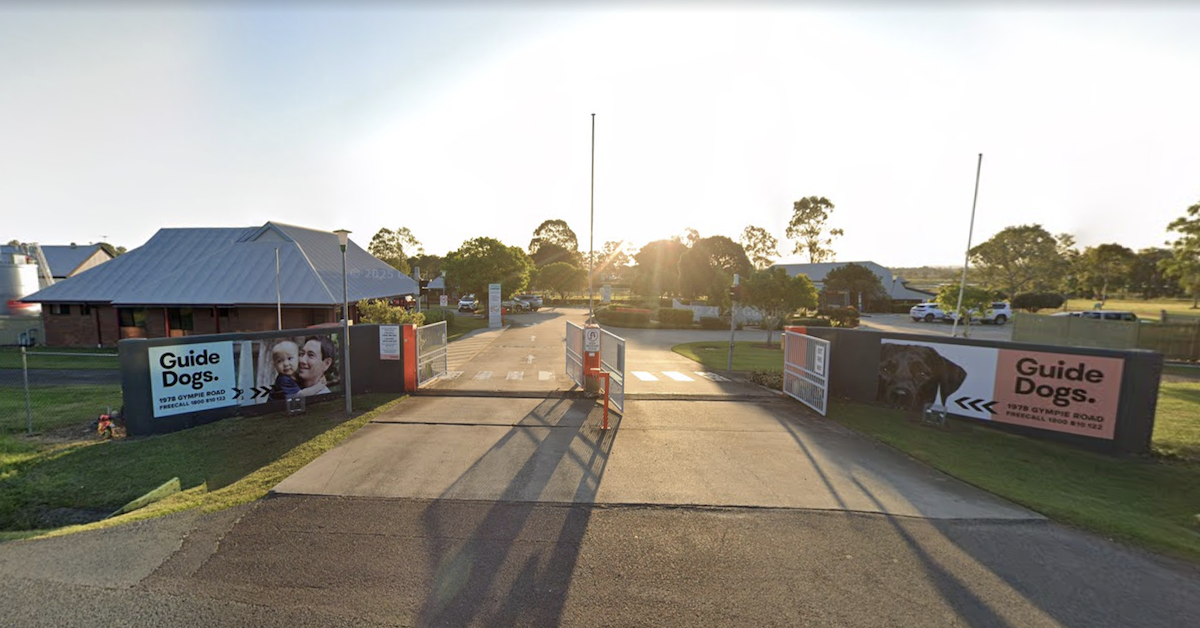
The AEIOU Foundation, one of Australia’s longest-running providers of early intervention therapy for children with autism, has gone into liquidation and permanently closed all of its centres, including its Bald Hills site that served families across Brisbane’s northern suburbs. The closure took effect on 12 March 2026, with all enrolments cancelled from that date.


Read: Accessible Kitchen Hub Opens in Bald Hills to Aid Low Vision


Liquidators Bradley Hellen and Cameron Woodcroft of Pilot Partners were appointed in March 2026, and confirmed the following day that AEIOU did not have the financial capacity to continue trading. All bookings, appointments and enrolments from 12 March were cancelled, and families were told not to visit the centres as they would be closed.

AEIOU
Photo credit: Google Maps/AEIOU Foundation for Children with Autism (Bald Hills)

For one single father in Brisbane’s north, the closure brought an abrupt end to 14 months of progress at the Bald Hills centre. His young son, who has autism, had been slowly learning to communicate over that time. The closure cancelled his son’s enrolment with immediate effect.

He is one of many families now facing a search for alternative services. Waitlists for early intervention therapy in Queensland can be lengthy, and families affected by the closure have been urged to contact the NDIS as a first step.

When therapy stops, the clock keeps ticking

AEIOU
Photo credit: Google Maps/AEIOU Foundation for Children with Autism (Bald Hills)

Research consistently identifies the pre-school years as a critical window for early intervention in autism. According to Autism Awareness Australia, early intervention during this period can significantly improve long-term outcomes for children in areas including communication, behaviour, and independence. Gaps in service during this window can be difficult to recover from.

In a statement released through the liquidators, the AEIOU board said the collapse followed “a sustained period of financial pressure across the disability services sector,” citing increasing costs, workforce challenges, and what it described as “significant changes in the funding environment that supports disability services.” 

The board said it had spent years implementing restructuring and cost management measures in an attempt to keep the organisation viable, but ultimately concluded that entering administration was the most responsible course of action.


Read: Local Community Mourns Restaurant Worker Killed in Bald Hills Crash


Affected families have been advised that NDIS participants will be contacted by the National Disability Insurance Agency (NDIA). Families can also reach out to their early childhood partner, local area coordination partner or support coordinator, or phone the NDIS directly on 1800 800 110, Monday to Friday, 8am to 8pm AEST. Liquidator enquiries can be directed to AEIOU@pilotpartners.com.au

Featured image credit: Google Maps/AEIOU Foundation for Children with Autism (Bald Hills)

Published 1-May-2026