



When Dolly Came to Brisbane: A Local Farewell to a Country Music Legend

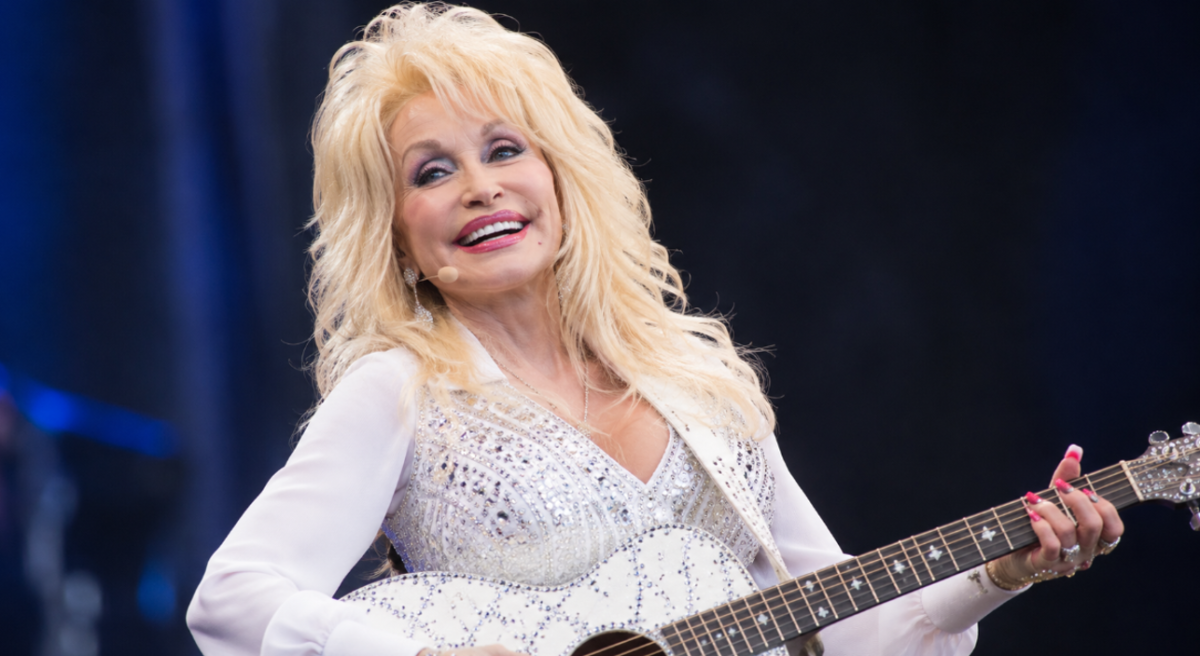
Dolly Parton’s death at the age of 80 will be felt a long way from the Tennessee mountains where her remarkable story began. In Brisbane, there are thousands of people who can remember seeing that story play out in person.

Parton performed at the Brisbane Entertainment Centre 10 times across three visits spanning 27 years, beginning with four shows alongside Kenny Rogers in 1987 and ending with three concerts on her Blue Smoke World Tour in 2014.

The country music legend died on Tuesday, 25 August, leaving behind a career that stretched almost seven decades and produced some of the most recognisable songs in popular music.

Brisbane was fortunate enough to welcome her at three very different points along the way.

Kenny and Dolly Arrive in Boondall

Parton’s first documented Brisbane concerts came in February 1987, when the Brisbane Entertainment Centre itself was barely a year old.

Then came Kenny and Dolly.

Parton and Kenny Rogers were already firmly associated in the public imagination through Islands in the Stream, their huge 1983 duet, and Real Love, released two years later. Their Australian tour reached Boondall for an extraordinary four concerts in five nights, on 23, 24, 25 and 27 February.

For Brisbane audiences, this was Dolly at the height of her crossover fame. She had already made 9 to 5, established herself on the big screen and taken songs such as Jolene and I Will Always Love You well beyond their country music beginnings.

Those four nights also began a long association between Parton and the Entertainment Centre, the venue she would return to on both of her later Brisbane visits.

A 24-Year Wait for Her Return

Brisbane then waited a very long time for another Dolly Parton concert. She finally returned in November 2011 on the Better Day World Tour, playing three consecutive nights at the Brisbane Entertainment Centre on 25, 26 and 27 November. The middle show was sold out before the tour arrived.

A generation had passed since the Kenny Rogers concerts, but Parton’s audience had become broader rather than smaller. Whitney Houston’s version of I Will Always Love You had introduced her songwriting to millions more listeners, while 9 to 5, Jolene and Coat of Many Colors had become songs parents could share with children who weren’t even born when Dolly first played Boondall.

The 2011 tour marked her return to Australia after a lengthy absence, and Brisbane’s three-night run showed there was still considerable appetite to see her. At 65, she wasn’t simply revisiting an old catalogue either: Better Day, her 41st studio album, had been released only months earlier.

Brisbane’s Last Chance to See Dolly

The wait for the next visit was much shorter. Parton returned to Boondall in February 2014 on her Blue Smoke World Tour, performing on 21, 22 and 25 February.

Australia had a prominent place in that chapter of her career. The Blue Smoke album was released first in Australia and New Zealand to coincide with the tour and went to No. 1 in both countries.

A review of her Brisbane show that month found a 68-year-old Parton still moving comfortably between the old and the new. Jolene appeared early, Coat of Many Colors drew on the Tennessee childhood that shaped so much of her songwriting, and Islands in the Stream and 9 to 5 helped bring the show towards its close before I Will Always Love You finished the night.

There was new material as well, along with the humour and storytelling that had become as much a part of a Dolly Parton concert as the rhinestones.

Few in those audiences could have known that these would be her final Brisbane appearances.

Parton eventually announced in 2022 that she was finished with large-scale touring, although she continued recording and making occasional appearances. She released the rock album Rockstar the following year and remained musically active into her late 70s. In January this year, she marked her 80th birthday with a new recording of Light of a Clear Blue Morning.

For Brisbane, though, the memories lead back to Boondall. Between February 1987 and February 2014, Dolly Parton walked onto the Brisbane Entertainment Centre stage 10 times. Some fans saw her beside Kenny Rogers, others waited 24 years for her return, while a younger generation caught her during those final Australian shows.

She never made it back to a Brisbane stage after 2014, but for the people who filled the Entertainment Centre on those 10 nights, Dolly Parton wasn’t always a legend somewhere far away in Tennessee.

Every now and then, Dolly came to Brisbane.

Published 25-August-2026

Fitzgibbon Is Named After the Man Who Changed Queensland Rail

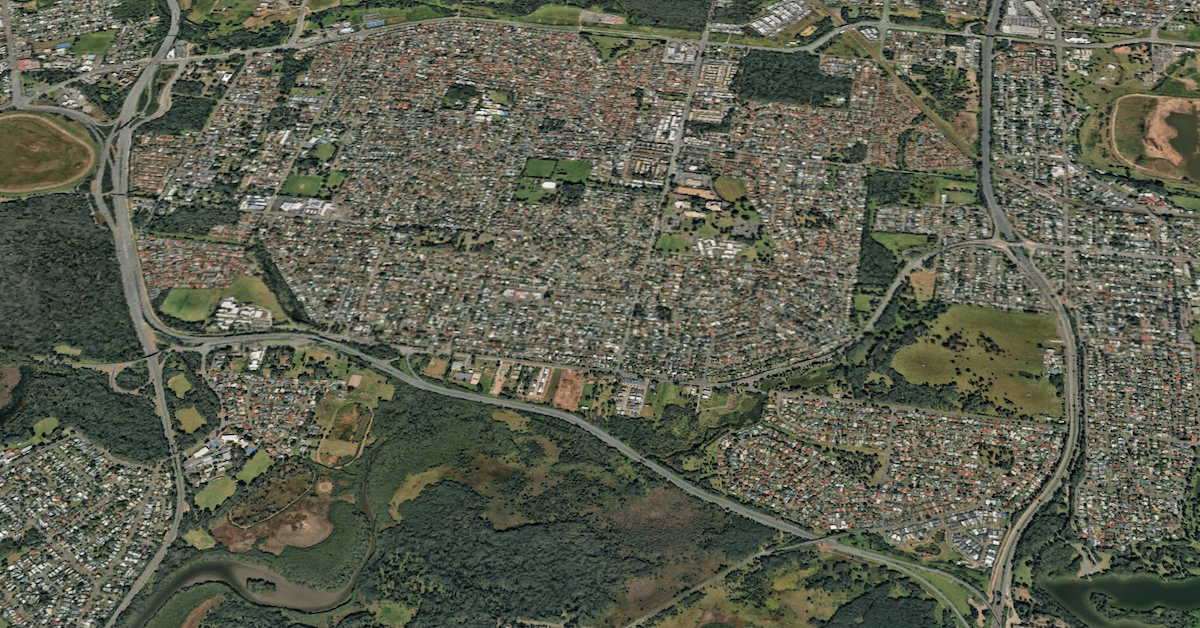
On Brisbane’s northside, where modern housing meets remnants of bushland, there is little to suggest a place anchored in colonial drama. In Fitzgibbon, the suburban streets hum with the quiet routine of modern life, showing few visual clues to the fierce debates that once shaped the state. 


Embedded in the locality’s identity, however, lies the footprint of an Irish engineer who helped convince a cash-strapped colonial government to make a contentious infrastructure gamble.

An engineer with a cheaper way west

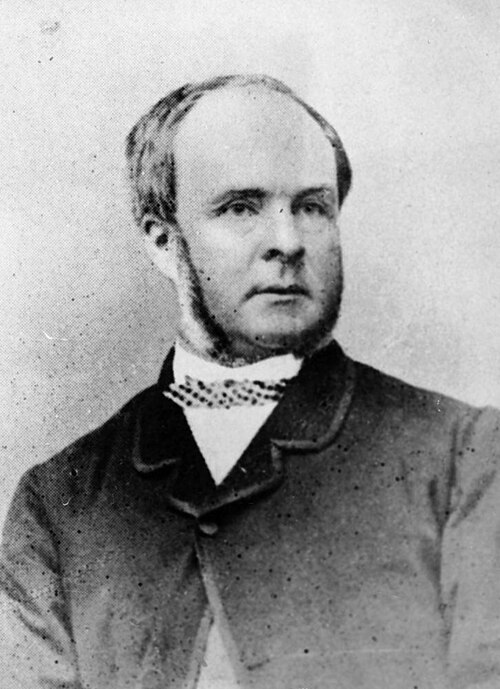
Colonial ambition demanded better access to the rich agricultural lands of the Darling Downs, while bullock teams struggled over rough roads vulnerable to bad weather. Abraham Fitzgibbon arrived in Queensland in June 1863 and was soon drawn into the colony’s search for an affordable railway. Appointed Chief Engineer in September, the former New Zealand railway consultant advocated a narrow 3 ft 6 in gauge rather than the 4 ft 8½ in standard gauge.

The narrower system promised cheaper construction and greater flexibility through difficult country. Opposition was fierce. Debate over the 1863 Railway Bill focused heavily on the proposed gauge, while critics in Parliament and the press questioned whether the colony was taking too great a risk on an unconventional main-line railway.

Queensland ultimately backed Mr Fitzgibbon’s approach.

Three feet six inches — and no turning back

Crews broke ground on the first section at North Ipswich in 1864 after months of political argument. Queensland’s first railway opened to Bigge’s Camp, later Grandchester, on 31 July 1865, and the network soon pushed west towards Toowoomba, Dalby and Warwick.

The opening vindicated narrow gauge as a workable railway system, but Mr Fitzgibbon’s own career remained contentious. Professional and political disputes continued around the railway program, and his contract was terminated in 1867.

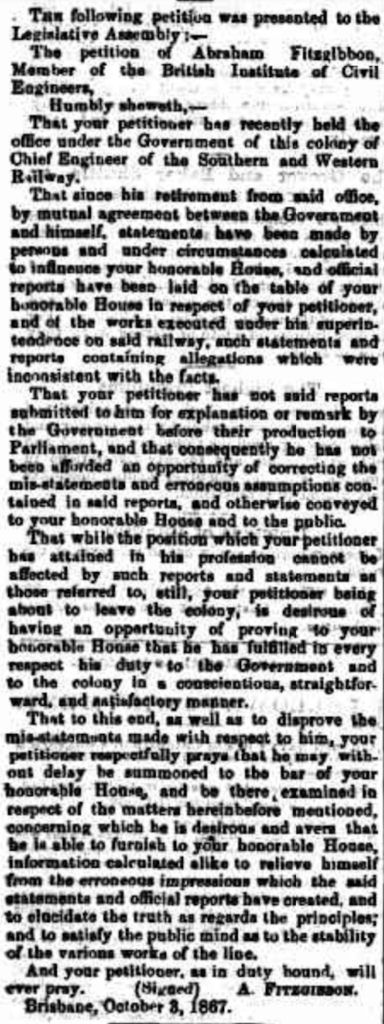
Abraham Fitzgibbon’s petition to the Queensland Legislative Assembly, dated 2 October 1867, in which the former Chief Engineer of the Southern and Western Railway challenged official reports about his conduct and sought an opportunity to defend his professional reputation.
Photo Credit:
National Library of Australia

Mr Fitzgibbon later returned to Britain and died at Bushey Heath, Hertfordshire, in 1887, but the gauge he championed endured. By the turn of the century, thousands of kilometres of narrow-gauge railway had been laid across Queensland, forming the backbone of a network that connected inland communities with ports and markets.

Much of Queensland’s rail system still operates on the same 1,067 mm gauge.

His name found a home a century later

A century after the first railway opened, Mr Fitzgibbon’s name resurfaced on Brisbane’s expanding northside. The suburb was formally named after him in 1971, giving a comparatively modern community an unexpected link to Queensland’s pioneering railway history.

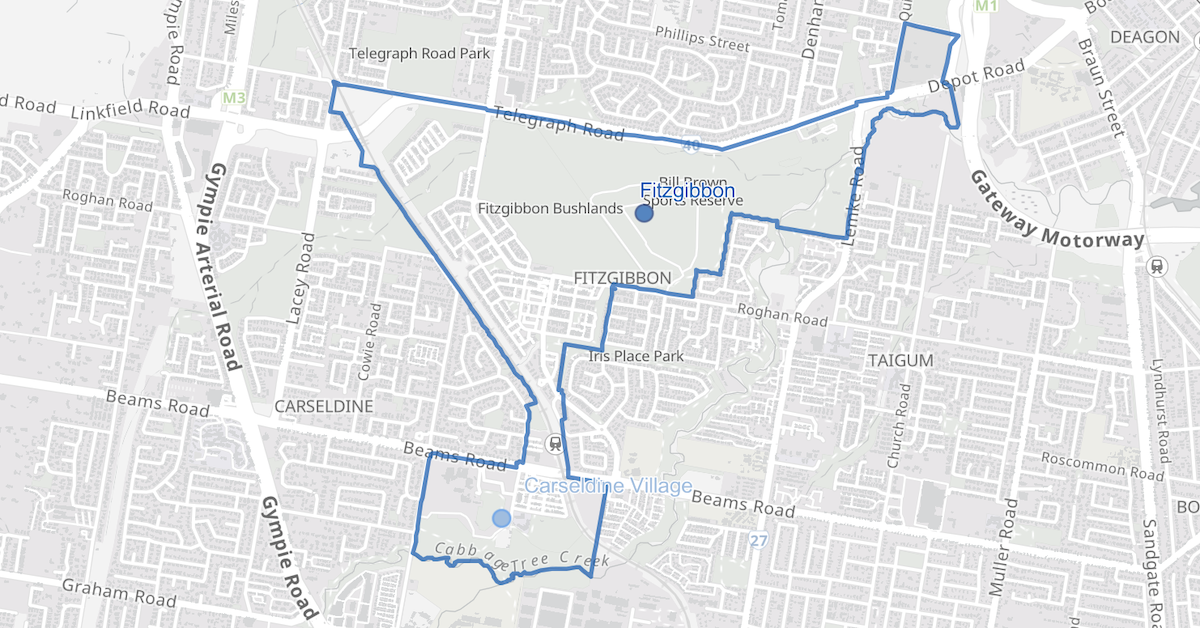
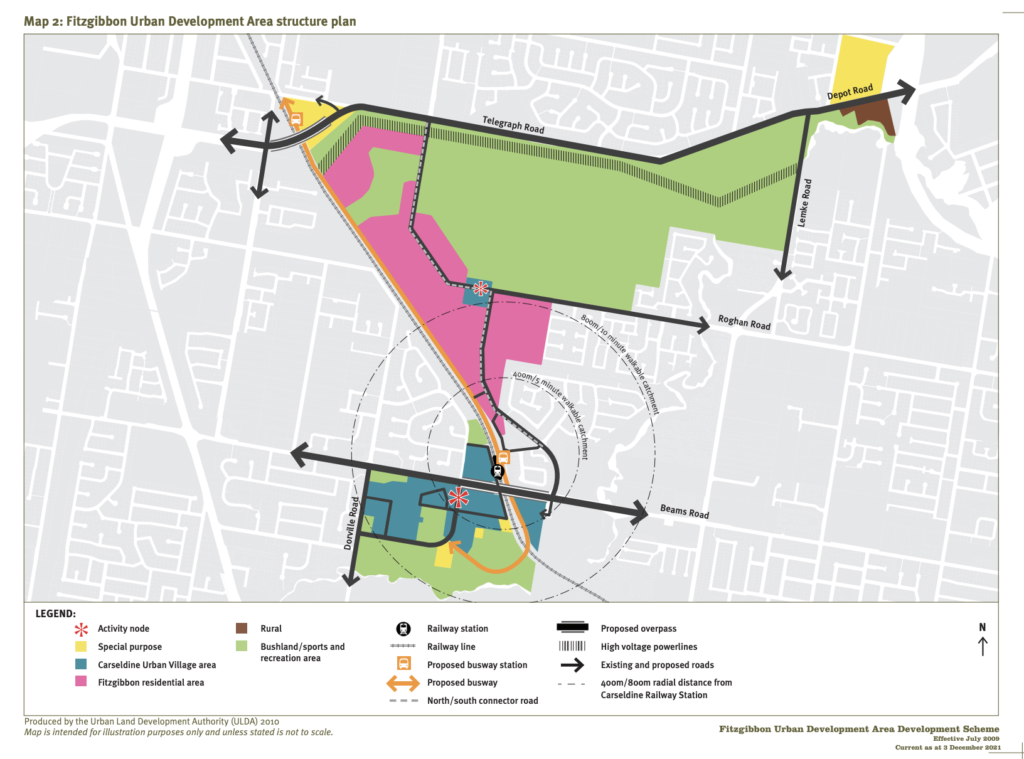
The declaration of the Fitzgibbon Priority Development Area in 2008 set the scene for substantial residential development across the district while planning documents also recognised significant bushland, open space and ecological corridors.

Photo Credit: edq.qld.gov

Nearby Boondall Wetlands adds to the environmental importance of the broader area. Mangroves, tidal flats, wetlands and forest provide habitat for native wildlife and migratory shorebirds only a short distance from established suburbs.


Mr Fitzgibbon helped force colonial lawmakers to decide how far they were prepared to depart from railway convention to build a network Queensland could afford. Today, the suburb bearing his name sits inside another debate over how a growing city accommodates housing while retaining valuable natural habitat.

Published 21-Aug-2026

Fitzgibbon Is Named After the Man Who Changed Queensland Rail

On Brisbane’s northside, where modern housing meets remnants of bushland, there is little to suggest a place anchored in colonial drama. In Fitzgibbon, the suburban streets hum with the quiet routine of modern life, showing few visual clues to the fierce debates that once shaped the state. 


Embedded in the locality’s identity, however, lies the footprint of an Irish engineer who helped convince a cash-strapped colonial government to make a contentious infrastructure gamble.

An engineer with a cheaper way west

Colonial ambition demanded better access to the rich agricultural lands of the Darling Downs, while bullock teams struggled over rough roads vulnerable to bad weather. Abraham Fitzgibbon arrived in Queensland in June 1863 and was soon drawn into the colony’s search for an affordable railway. Appointed Chief Engineer in September, the former New Zealand railway consultant advocated a narrow 3 ft 6 in gauge rather than the 4 ft 8½ in standard gauge.

The narrower system promised cheaper construction and greater flexibility through difficult country. Opposition was fierce. Debate over the 1863 Railway Bill focused heavily on the proposed gauge, while critics in Parliament and the press questioned whether the colony was taking too great a risk on an unconventional main-line railway.

Queensland ultimately backed Mr Fitzgibbon’s approach.

Three feet six inches — and no turning back

Crews broke ground on the first section at North Ipswich in 1864 after months of political argument. Queensland’s first railway opened to Bigge’s Camp, later Grandchester, on 31 July 1865, and the network soon pushed west towards Toowoomba, Dalby and Warwick.

The opening vindicated narrow gauge as a workable railway system, but Mr Fitzgibbon’s own career remained contentious. Professional and political disputes continued around the railway program, and his contract was terminated in 1867.

Abraham Fitzgibbon’s petition to the Queensland Legislative Assembly, dated 2 October 1867, in which the former Chief Engineer of the Southern and Western Railway challenged official reports about his conduct and sought an opportunity to defend his professional reputation.
Photo Credit:
National Library of Australia

Mr Fitzgibbon later returned to Britain and died at Bushey Heath, Hertfordshire, in 1887, but the gauge he championed endured. By the turn of the century, thousands of kilometres of narrow-gauge railway had been laid across Queensland, forming the backbone of a network that connected inland communities with ports and markets.

Much of Queensland’s rail system still operates on the same 1,067 mm gauge.

His name found a home a century later

A century after the first railway opened, Mr Fitzgibbon’s name resurfaced on Brisbane’s expanding northside. The suburb was formally named after him in 1971, giving a comparatively modern community an unexpected link to Queensland’s pioneering railway history.

The declaration of the Fitzgibbon Priority Development Area in 2008 set the scene for substantial residential development across the district while planning documents also recognised significant bushland, open space and ecological corridors.

Photo Credit: edq.qld.gov

Nearby Boondall Wetlands adds to the environmental importance of the broader area. Mangroves, tidal flats, wetlands and forest provide habitat for native wildlife and migratory shorebirds only a short distance from established suburbs.


Mr Fitzgibbon helped force colonial lawmakers to decide how far they were prepared to depart from railway convention to build a network Queensland could afford. Today, the suburb bearing his name sits inside another debate over how a growing city accommodates housing while retaining valuable natural habitat.

Published 21-Aug-2026

Bracken Ridge Kindergarten Marks 50 Years

Bracken Ridge Kindergarten has spent half a century doing what neighbourhood institutions often do best – becoming part of the fabric of a place while helping shape generations of local childhoods.


Established in 1976, the Barrett Street kindergarten is marking its 50th anniversary in 2026 with a Family Fun Day, Mega Raffle and a commemorative book intended to collect memories and stories from those who have been part of the centre over the decades. 

The celebrations, set for October 2026,  will look back on five decades of children, parents, educators and volunteers who have helped make the kindergarten a familiar part of Bracken Ridge.

A kindy woven into the suburb

At 221 Barrett Street, the kindergarten is set among mature trees and a grassy, shaded playground where children have room to run, explore, invent games and follow their curiosity.

This outdoor environment sits at the centre of the kindergarten’s play-based approach, where children learn by discovering, creating, testing ideas and making connections between what they already know and what they encounter each day.

Photo Credit: Bracken Ridge Kindergarden

The centre describes daily life as one filled with children sharing ideas, engaging in play and moving through a setting shaped by birdlife, cooling breezes and established trees.

Thus, over time, those ordinary experiences have become part of a wider local story — one built not through a single event, but through thousands of everyday moments shared by children and families.

Fifty years of changing childhoods

When Bracken Ridge Kindergarten opened, Queensland was in the middle of a major expansion of preschool education.

The early 1970s brought greater government involvement in early childhood education, with free, non-compulsory preschool programs introduced for four- and five-year-old children. By mid-1980, Queensland had 357 preschool centres.

Photo Credit: Bracken Ridge Kindergarten

Community kindergartens, however, had a much older lineage, shaped by the kindergarten movement that began taking hold in Queensland in the late 19th century and later developed through organisations associated with the Creche and Kindergarten movement.

Built by families, not just for them

Bracken Ridge Kindergarten is a not-for-profit community kindergarten, and that community model has always carried practical weight.

Parents have served on management committees, taken part in decision-making and worked alongside educators to support the centre and its programs. Grandparents and caregivers have also contributed, working with staff to help create a safe and supportive environment for children.

This model has kept families closely involved in the life of the kindergarten. Their cultures, values and experiences are recognised as part of children’s learning, while local connections help children develop a stronger sense of the community in which they are growing up.

The kindergarten also incorporates learning about Australia’s First Peoples, with resources and experiences designed to build understanding of Country and culture.

Aboriginal Elder Uncle Joe has shared his knowledge of Country with children and adults at the centre, reflecting the kindergarten’s broader emphasis on identity, belonging and respect for diversity.

A birthday measured in memories

The 50th anniversary is as much about memory as celebration.

The commemorative book is intended to capture stories from the kindergarten’s five decades and preserve experiences that might otherwise remain scattered across personal recollections and family archives.

Many of the children who attended the kindergarten’s early years are now well into adulthood, while past committee members and educators are among those whose memories could help document how the centre has changed.

The Family Fun Day and Mega Raffle will give the wider community a chance to mark that history together.

After five decades on Barrett Street, the kindergarten provides a line of continuity in the local community.


Children still arrive to explore, learn and play. Families still entrust educators with some of their earliest years, and beneath the trees on Barrett Street, another generation is making memories of its own.

Published 21-Aug-2026

Bracken Ridge Yards Targeted in Suburban Wastewater Blitz

Urban Utilities inspectors now possess the legal authority to enter private properties across Bracken Ridge to hunt for household plumbing faults that are flooding the local sewer network.


The Smoke Screen 

Starting from July 1, the Wet Weather Overflow Reduction Programme will roll out across Brisbane and Ipswich to tackle stormwater overwhelming the system. How exactly do you find a hidden pipe crack? You use smoke. Delivery crews will pump non-toxic vapour into neighbourhood maintenance holes. If a home is properly connected, the harmless cloud simply vents out through the roof. 

A sudden plume of smoke rising from a garden bed or a roof gutter tells a very different story. That signals an illegal connection or a broken pipe. Residents do not even need to be home for this process, though crews do require access to yards.

The Cost of Compliance 

The financial burden of fixing these faults falls heavily on the homeowner. Utility data indicates that private properties generate about three-quarters of the excess water flooding the network, with one in ten properties hooked up incorrectly. Those caught with illegal downpipe connections must pay for the repairs out of their own pockets. The authority will only cover the cost of free caps for low-lying overflow gullies. 

Defending the scheme, an Urban Utilities representative noted the testing acts as a diagnostic tool to guide future actions. They maintained that managing weather impacts requires cooperation, adding that the utility continues to invest in its own infrastructure upgrades while working with local councils.


A One-Sided Inspection?

The current mandate zeroes in exclusively on the customer side of the property line. Public notices completely omit any plans to inspect the utility’s own public network. Much of that mainline infrastructure dates back to the 1960s and 1970s. Does the South-East Queensland Water Act strip locals of their privacy? No. Despite the new powers of entry, community members still hold fundamental rights. A resident can demand official identification from any inspector at their gate. If the timing is bad, homeowners can legally request the checks be rescheduled to a more appropriate hour.

Published Date 19-August-2026

Bracken Ridge Man Charged Over Decades-Old Sexual Offences Against Young Girls

A 67-year-old Bracken Ridge man has been charged over historical sexual offences allegedly committed against five young girls across a span of nearly two decades, with police saying the abuse began in the early 1970s.


The man was arrested at his Bracken Ridge home on 14 August and now faces 34 charges in total. These include rape, indecent treatment of girls under 16, indecent treatment of girls under 17, threatening violence, and deprivation of liberty. Police allege the victims were pre-teen and teenage girls who were known to the accused, and that some of the offending occurred at a north Brisbane bakery where he was employed at the time.

The alleged abuse is said to have continued into the late 1980s, meaning it spanned close to two decades before it was finally brought to light. The matter was first reported to police in May last year, prompting an investigation by the Boondall Child Protection Investigations Unit.

Detective Senior Sergeant Derek Harris acknowledged the significance of what it takes for survivors to speak out, noting that detectives remain committed to following every lead and pursuing justice for those who have been harmed. He confirmed the investigation is continuing.

The accused was refused bail and is next due to appear before Brisbane Magistrates Court on 28 September.


Anyone who has experienced sexual violence can contact support services including the Queensland Sexual Assault Helpline on 1800 010 120, 1800RESPECT on 1800 737 732, or Bravehearts on 1800 272 831.

Published 17-August-2026

Murrumba Downs Wastewater Plant Upgrades to Support Growing Northern Suburbs

Unitywater is upgrading its Murrumba Downs Wastewater Treatment Plant as part of a major infrastructure program designed to support population growth across Brisbane’s northern suburbs and the Moreton Bay region.


The treatment plant processes around 25 megalitres of wastewater every day—equivalent to approximately 5.5 million toilet flushes—and services about 187,000 homes and businesses in Bray Park, Dakabin, Griffin, Joyner, Kallangur, Lawnton, Mango Hill, Murrumba Downs and Strathpine.

The works form part of Unitywater’s $500 million renewals and replacements program, which aims to strengthen water and wastewater infrastructure across its service region.

Photo Credit: Supplied

Unitywater Executive Manager Sustainable Infrastructure Solutions Mike Basterfield said several significant upgrades were underway at the facility.

The project includes refurbishing the plant’s bioreactor, replacing aeration diffusers that supply oxygen to the microorganisms used in wastewater treatment, upgrading a cloth media filter tank and constructing a new aeration tank to improve the plant’s biological treatment process.

One of the most visible additions is a new 16-metre-tall barometric loop installed upstream of the treatment plant.

The U-shaped structure uses gravity and atmospheric pressure to improve pumping efficiency while helping reduce odour and the risk of blockages within the wastewater network.

Mr Basterfield said the crane installation of the structure also attracted the attention of children from the neighbouring Green Leaves Early Learning Centre, who later visited the site wearing miniature high-visibility vests.


Dormway installed the barometric loop earlier this year, while Downer is completing the remaining upgrades, which are scheduled to be finished by November 2026.

Published 22-July-2026. Updated 12-August-2026.

Gympie Road Tunnel Timeline May Come After 2032 Olympics

Residents in Bracken Ridge could be waiting until after the 2032 Olympic and Paralympic Games before seeing relief from one of north Brisbane’s most persistent traffic headaches, following fresh questions over the future timeline of the proposed Gympie Road bypass tunnel.


The project has come under renewed scrutiny after Brisbane LM Adrian Schrinner referred to the tunnel as one of the first major projects expected to begin after the 2032 Games during Brisbane City Council’s 2026-2027 budget.

The comments have reignited debate about whether motorists travelling from Bracken Ridge and surrounding northern suburbs will continue facing years of congestion on the city’s busiest northern transport corridor before construction even begins.

A Project Beyond Carseldine With Flow-On Effects for Bracken Ridge

While the proposed tunnel would run underground between Carseldine and Kedron, its impact would extend well beyond the suburbs directly above the route.

Many Bracken Ridge residents rely on Gympie Road for daily travel south towards employment hubs, schools, hospitals and Brisbane’s CBD. Congestion frequently builds around major intersections including Beams Road, Hamilton Road, Rode Road and Stafford Road, creating delays that ripple across the wider northside road network.

The proposed nine-kilometre tunnel is designed to divert through-traffic away from these heavily congested sections, reducing pressure on surface roads and improving travel times for motorists travelling from growth suburbs across Brisbane’s north.

Planning investigations have identified potential tunnel entry and exit points near Chermside, although no final design has been confirmed.

Photo Credit: Google Maps

Debate Intensifies Over Delivery Date

The budget comments quickly triggered criticism from political opponents, who argued that Northside residents should not be forced to endure years of additional congestion while waiting for a long-promised solution.

In response, the State Government rejected suggestions the project had been delayed or abandoned. Transport Minister Brent Mickelberg said planning work remains active and continues to progress through the review process outlined during the 2024 state election campaign.

Mr Schrinner’s office later clarified that the comments were intended to reflect the scale and complexity of the project rather than signal a formal post-2032 construction start.

The office noted that major transport infrastructure projects often require lengthy planning, approvals and funding arrangements before construction can commence.

Residents Question Whether Other Transport Solutions Should Come First

The uncertainty surrounding the tunnel has also fuelled discussion about whether alternative transport investments could provide faster relief for north Brisbane communities.

Online community discussions have highlighted growing support for expanded busway infrastructure, improved rail services and future extensions of Brisbane Metro into the northern suburbs. Supporters of these options argue public transport upgrades could remove vehicles from congested roads more quickly than waiting for a major tunnel project to be delivered.

Others maintain that Gympie Road’s traffic volumes have reached a point where an underground bypass remains the most effective long-term solution, particularly for removing through-traffic from local roads.

The debate reflects broader questions about how Brisbane should accommodate continued population growth while balancing investment between roads and public transport.

Years of Planning Already Underway

Despite ongoing uncertainty about delivery timeframes, significant planning work has already been completed.

In 2023, the Queensland Government committed $35 million towards a detailed business case for the tunnel through North Brisbane Infrastructure, a body established under the Queensland Investment Corporation.

A further $318 million was allocated in the 2024 state budget for pre-construction activities, including traffic modelling, engineering investigations and environmental assessments.


Responsibility for the project transferred to the Department of Transport and Main Roads in 2025, with the department continuing to review planning work and assess future transport options for the Gympie Road corridor.

Published 22-June-2026. Updated 12-August-2026.
Featured Image Credit: CrSallyLanders

Major Gateway Upgrade to Reshape Bracken Ridge Roads, Paths and Access

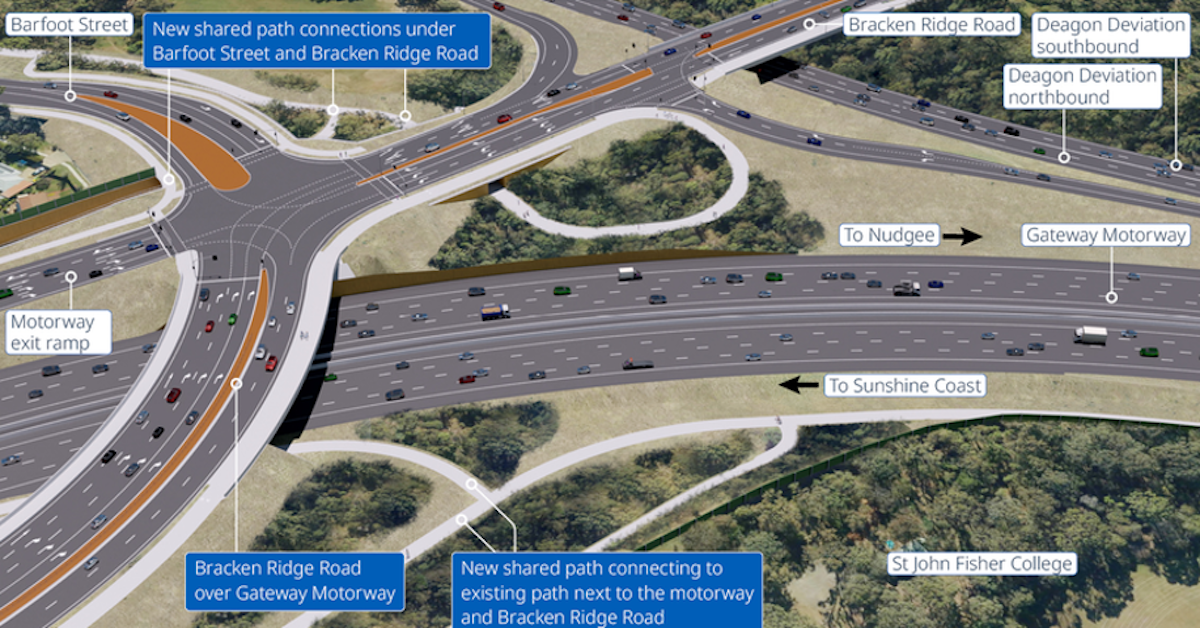
A major upgrade to the Gateway Motorway and Bruce Highway is set to bring significant changes to Bracken Ridge, with new road connections, redesigned intersections and expanded shared paths planned across the suburb.


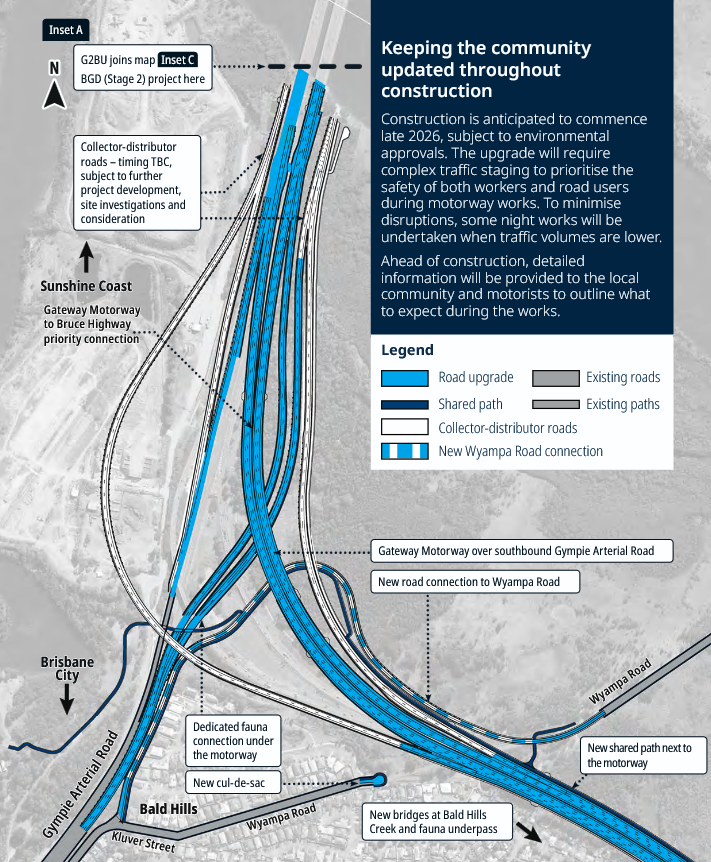
The works form part of the Queensland Government’s Gateway to Bruce Upgrade (G2BU), with construction expected to begin in late 2026, subject to approvals.

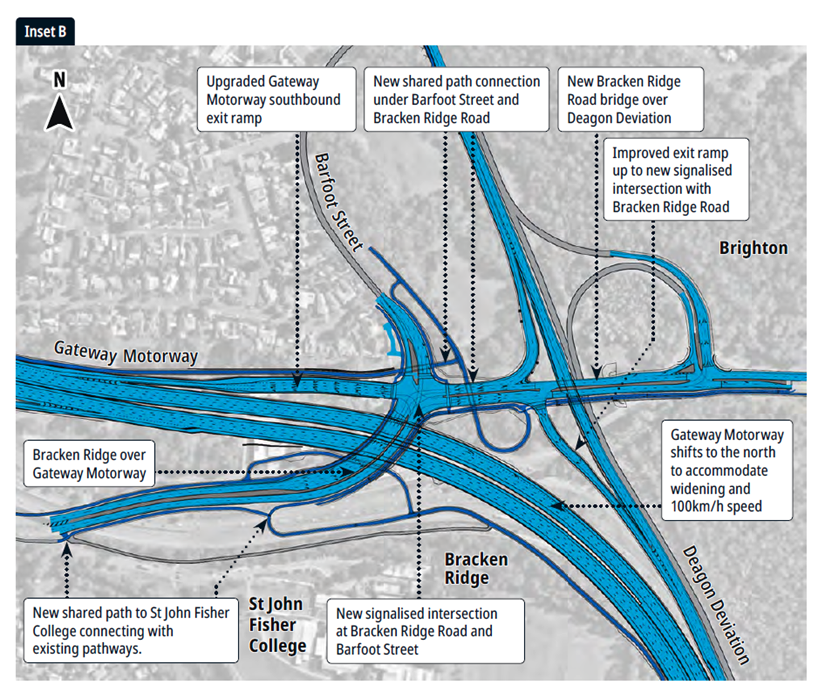
For Bracken Ridge residents, the project centres on the busy corridor around Barfoot Street, Bracken Ridge Road and the Gateway Motorway — an area set for major transformation.

New paths and a continuous northside cycling corridor

One of the most notable additions is a continuous shared path running along the northern side of the motorway, effectively creating a direct cycling and walking link between Dohles Rocks Road and Barfoot Street.

The route will cross the Pine River, offering a safer and more connected option for commuters travelling between North Lakes, Murrumba Downs and Brisbane’s northside suburbs.

While the path will run alongside the motorway, limiting access points in some sections, it is expected to significantly improve long-distance connectivity for cyclists and pedestrians.

Major changes at Barfoot Street and St John Fisher precinct

Closer to home, the “Bracken Ridge bend” near Barfoot Street and St John Fisher College will see some of the most extensive upgrades.

Plans include wider shared paths, new underpasses, upgraded crossings and improved links between existing and new infrastructure — designed to make movement through the area safer and more efficient.

A new signalised intersection at Barfoot Street and Bracken Ridge Road is also planned, alongside improved motorway access ramps and connections.

Wyampa Road overhaul to improve local access

Further north, Wyampa Road is set for a major reconfiguration, including the removal of the existing overpass and the introduction of new connections.

The changes are expected to improve access to Tinchi Tamba and surrounding areas, while also linking into new shared paths and underpasses connecting through to parklands and local routes.

Additional connections, including a link under the motorway towards Canterbury Park, are designed to improve local accessibility and create safer movement options for cyclists and pedestrians.

Construction impacts and long-term detours

Given the scale of the project, construction will be staged over several years, with traffic management and detours expected — particularly around the Bracken Ridge corridor.

Cycling and shared path users are also likely to face long-term detours during construction, with authorities indicating that updates will be provided as works progress.

A detailed staging plan is expected closer to the start of construction, outlining how disruptions will be managed for both motorists and active transport users.

The timeline — and what it means locally

While the headline changes are now clearer, the timeline is less immediate. Construction is not expected to begin until late 2026, meaning the project will remain in planning and approvals for some time yet.

Even then, the scale of the works means disruption will be a long-term reality for Bracken Ridge and surrounding suburbs. Staged construction, shifting traffic conditions and extended detours are likely to be part of daily life as the upgrade rolls out.

Beyond the first stage, further upgrades along the Bruce Highway corridor remain in the pipeline, including additional road connections and new bridges over the Pine River. Those elements are still in design and subject to further development.

For residents, the next phase will be less about construction and more about detail — how the project is staged, where access points sit, and how well the final design balances improved connectivity with local impacts.


Updated 8-August-2026.

Tully’s Trek To Honour Lawnton Guide Maddie Lawrence

Lawnton Guide Madeline “Maddie” Lawrence will be remembered through Tully’s Trek, an August fundraising event created to help Guiding members remain involved during difficult periods and support Dreams2Live4.


The first Tully’s Trek will take place on 29 August, bringing together Girl Guides Queensland members from the Brisbane North and Glasshouse regions.

Inspired by Relay for Life, the event will involve themed laps that participants can complete with the backing of sponsors. The fundraising will contribute to the newly established Tully’s Fund and Dreams2Live4.

Lawnton Guide’s Path From Brownies To Leadership

Maddie joined 3rd Lawnton Brownies at five years old and attended her first Guiding camp through the unit.

She later moved to 1st Lawnton Guides before joining Glasshouse Synergy Olaves, continuing to take part in camps, challenges and other activities.

Through Guiding, she developed confidence, recognised her strengths and formed friendships that continued throughout her involvement. The movement also gave her a strong sense of belonging.

Maddie went on to serve as a Junior Leader, helping to run activities and supporting younger members as they developed their own skills.

Her first Guiding name was Tullawong, meaning magpie. When she began leadership training at 18, fellow members shortened the name to Tully.

She remained involved while living with terminal cancer and attended her final camp at 23. Maddie later died following her cancer journey.

Tully’s Trek
Photo Credit: GoFundMe

Tully’s Fund To Help Members Stay Connected

Tully’s Trek will help build a fund for youth and adult Guiding members experiencing difficult circumstances.

The initiative is intended to help members remain connected to Guiding and reduce financial barriers that could prevent them from taking part in its activities and opportunities.

Jasmin Nash, who was an Olave alongside Maddie, has also linked a head-shaving fundraiser to the project. Money raised through her effort will support Tully’s Fund and Dreams2Live4.

Fundraiser To Support Dreams2Live4

Dreams2Live4 assists people living with metastatic cancer, relapsed lymphoma, relapsed leukaemia and high-grade brain tumours by helping them pursue personal dreams.

The national charity was founded by metastatic cancer patient Annie Robinson, who sought to provide people with advanced cancer with positive goals and meaningful experiences.

It has since worked with more than 4,000 Dreamers and their families, with its work reaching more than 300 hospitals and cancer centres across Australia.

Dreams2Live4 supported Maddie during her cancer journey and helped her create treasured memories. The details of her individual experience with the charity have not been specified.


Community members can support Tully’s Trek by sponsoring a participating Guide, donating to the fundraising effort or contacting the Glasshouse Region Girl Guides at glasshouseregion@guidesqld.org.

Published 22-July-2026